Masseria, palazzo or trullo: which kind of Puglia stay should you book?
Puglia's most characteristic stays create very different trips. Compare countryside masserie, town palazzi, trulli and full resorts before choosing a base.
By The Unlisted Editorial Team · 29 August 2026 · 7 min read
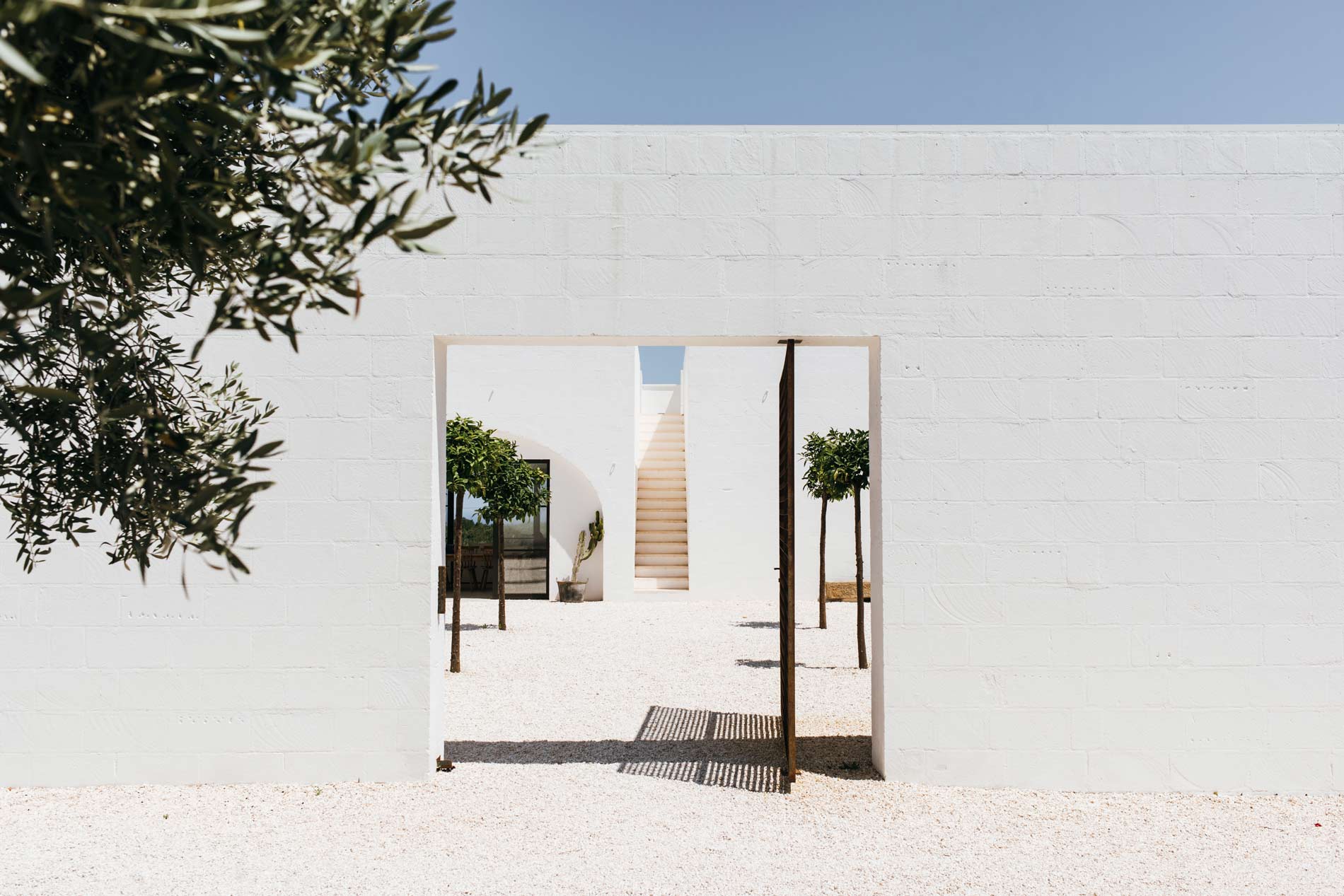
Book a masseria for pool, olive groves and slow dinners; a palazzo for architecture and walking to town life; a trullo for atmosphere and privacy, with fewer hotel services; or a resort when children, spa and choice matter. For a first week, pair one rural stay with one town or Salento base.
In Puglia, the building decides the holiday. A masseria outside Ostuni and a palazzo in southern Salento may both call themselves boutique, but one organises the day around the pool and a car while the other opens onto a town square. A trullo adds the region's most recognisable architecture, often without a reception desk. The right choice starts with what you want after six in the evening.
Choose a masseria for landscape and hotel days
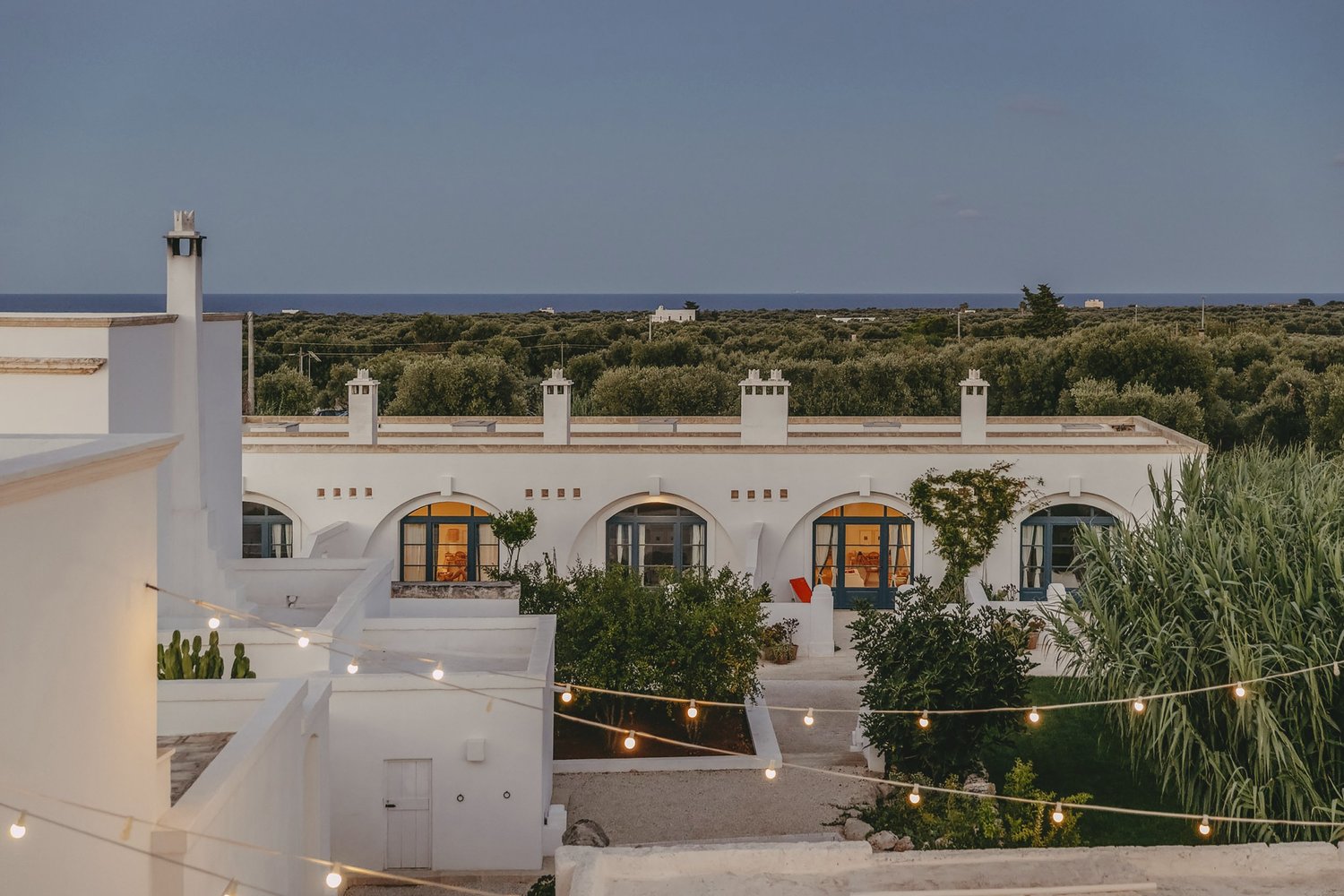
Masserie began as agricultural estates and now range from six-room houses to large resorts. Their advantage is space: olive groves, courtyards, pools and dinner without driving. Their weakness is the same distance that creates the quiet. Check whether the restaurant opens every night and how far the nearest town really is.
Near Ostuni, Masseria Moroseta is the intimate design answer. Masseria Calderisi, near Savelletri, adds spa, restaurant and beach access. The first feels like a house with a strong point of view; the second behaves like a complete hotel.
Choose a palazzo for architecture and local evenings
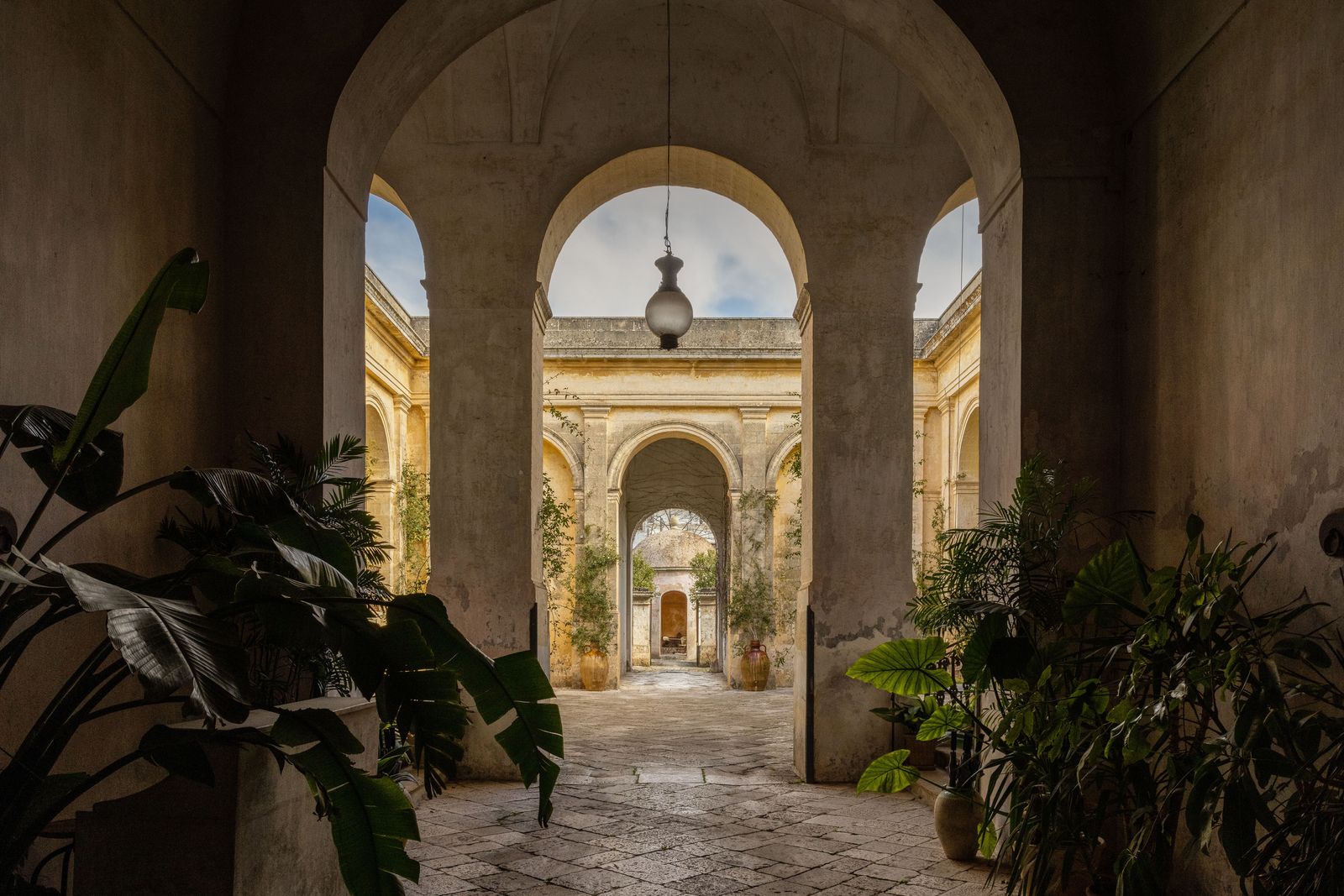
A palazzo stay puts the drama indoors: tall rooms, courtyards, old stone and contemporary interventions, usually inside a living town. You trade broad grounds for the ability to walk to a bar, bakery or square.
Palazzo Daniele in Gagliano del Capo is the radical version, with nine art-led suites and communal rooms inside an 1860 house. Book it for design and a southern Salento base, not for a resort timetable or a beach outside the door.
Choose a trullo for privacy, not full hotel service
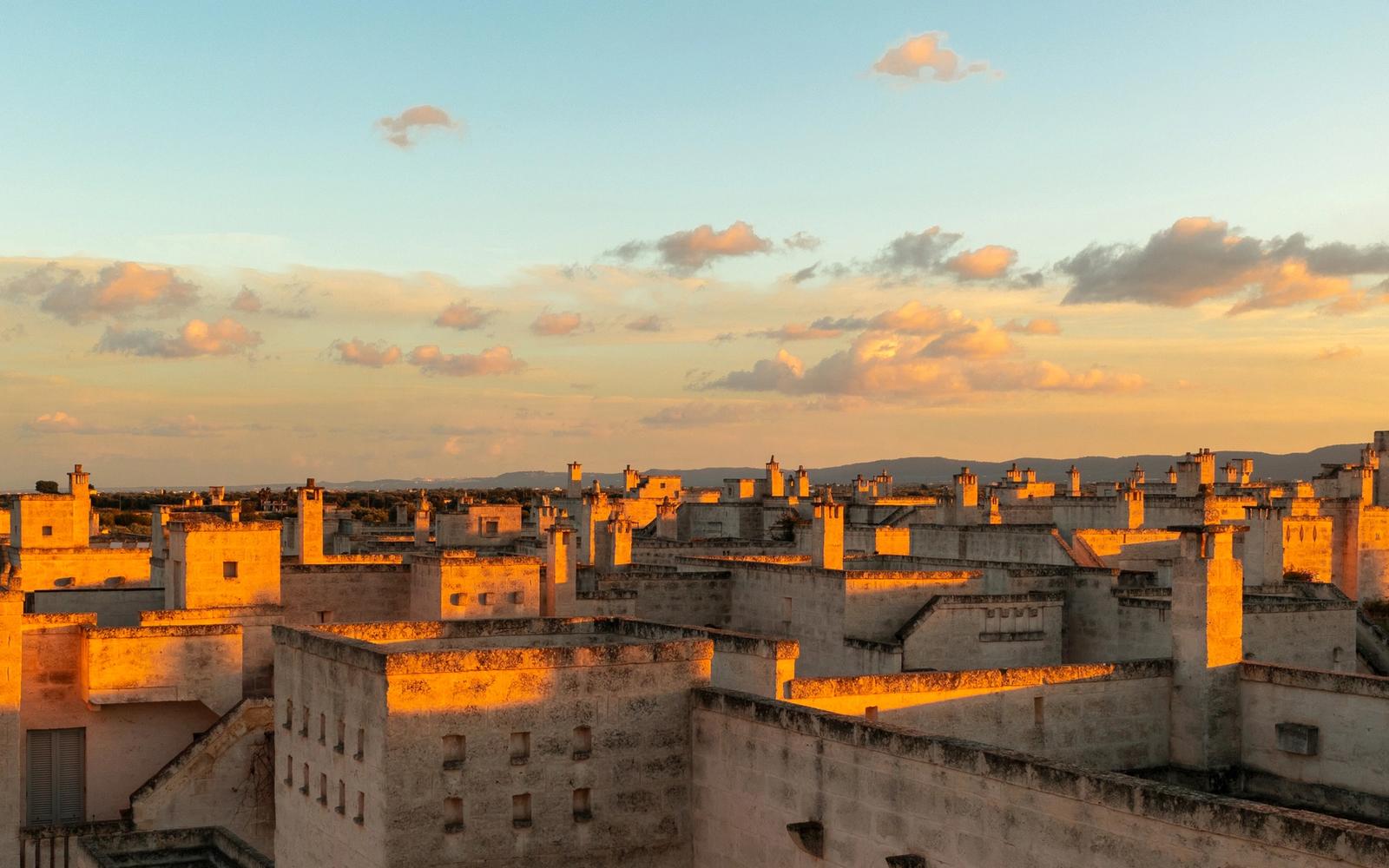
A trullo is the conical dry-stone building associated with the Valle d'Itria and Alberobello. Converted trulli can make memorable suites or private houses, with thick walls and a strong sense of place. They vary enormously: some sit inside hotel estates; others are self-catering homes with a key box and no daily service.
Ask about air conditioning, bathroom layout, natural light, pool privacy and whether the property has staff on site. For one or two nights, the architecture may be enough. For a week, most travellers will value the restaurant, shade and service of a good masseria.
When a resort is the honest answer
Families and multigenerational groups often need more than atmosphere. Borgo Egnazia is neither intimate masseria nor real village; it is a large purpose-built resort with rooms, houses, villas, golf, spa, children's clubs and several restaurants. That scale solves a trip where different ages want different days.
For seven nights, combine types instead of forcing one property to do everything: four nights in a Valle d'Itria masseria and three in a Salento palazzo. Our Puglia area guide shows where each base fits.
Frequently asked questions
What is the difference between a masseria and a trullo?
A masseria is an agricultural estate, often converted into a staffed hotel. A trullo is a specific conical dry-stone building that may be a room, suite or self-catering house.
Is it better to stay in a masseria or a town in Puglia?
Choose a masseria for landscape, pool and slow hotel days. Choose a town stay for walkable dinners, local life and less night-time driving.
Are trulli comfortable in summer?
Thick stone helps, but conversions differ. Confirm air conditioning, ventilation, shade and pool access before booking.
How many nights should you spend in a masseria?
Three or four nights work well in a one-week, two-base trip. Leave at least one day with no sightseeing so the estate is worth paying for.