Begur coves and beaches: a practical Costa Brava guide
Compare Sa Riera, Sa Tuna, Aiguablava, Fornells and quieter swimming spots, with parking, beach-bus, walking and hotel advice.
By The Unlisted Editorial Team · Updated 3 September 2026 · 14 min read

For three contrasting Begur coves, choose Sa Riera for the broadest family beach, Sa Tuna for a compact fishermen's-cove atmosphere, and Aiguablava for pale sand and clear water. Do not try to drive between all three at midday. Use one cove per half-day, arrive early in summer or take Begur's seasonal beach bus, and check the current municipal timetable before travel.
Begur's beaches sit below a hill town on separate folds of the coast. That geography creates the views, but it also creates the practical problem: a short distance can mean a steep road, a full car park and no easy way to move to the next cove. The best day is rarely the one with the longest list.
This guide compares the main coves by beach surface, atmosphere, access and who they suit. It also gives a realistic three-cove plan, explains the seasonal bus and separates the Camí de Ronda walks that genuinely connect from the tempting but inefficient idea of touring by car.

Begur coves compared
Conditions and services change with season and weather. This table is for choosing a character, not guaranteeing a particular sea state.
| Beach or cove | Surface and feel | Best for | Access reality |
|---|---|---|---|
| Sa Riera | Broad, coarse sand and more conventional beach space | Families and a longer beach day | Popular; reach early or use the seasonal bus |
| Sa Tuna | Small, sheltered-looking cove with fishermen's houses | Atmosphere, lunch and a compact swim | Very limited space; poor choice for midday improvisation |
| Aiguablava | Small sandy cove with clear, shallow-looking water | Scenic swimming and couples | Extremely popular; parking pressure is part of the day |
| Fornells | Small bathing points and a harbour setting | Coastal walks and hotel-based swimming | Not one large, all-purpose beach |
| Platja Fonda | Darker sand below cliffs | A less serviced, more natural stop | Steps and no easy family-beach convenience |
| Aiguafreda | Rocky waterfront and bathing access rather than sand | A quick swim and coastal atmosphere | Do not choose it expecting a sandy beach |
| Illa Roja | Exposed cove below red rock | Adults comfortable with naturist beach culture | Reached on foot; sea and path conditions matter |
The three-cove plan: Sa Riera, Sa Tuna and Aiguablava
If you only want the three essential Begur coves, give each a separate window. Sa Riera works for a first full beach morning because it has the most usable space. Sa Tuna suits a later swim tied to lunch or an early evening look at the fishermen's houses. Aiguablava deserves an early start on another day, combined with Fornells or Platja Fonda on foot rather than another drive.
The order can change with wind and sea conditions. Ask locally which side is calmer, then keep the other sector for tomorrow. Trying Sa Riera, Sa Tuna and Aiguablava in one summer day means crossing the hill twice and arriving at every parking area at the least favourable hour.
Sa Riera: the easiest full beach day
Sa Riera is Begur's largest beach and the clearest choice for families who need sand, room and nearby services. It is still a Costa Brava beach rather than a vast resort strand, so the comfortable space disappears quickly in high season. The seasonal bus from Begur serves this sector.
Use the edges of the day well: settle early, take a proper lunch, and leave before the main departure queue or stay for the late swim. The coastal path continues towards smaller beaches, but footwear and heat matter. A pushchair-friendly promenade should not be assumed for an entire coastal route.
Sa Tuna and Aiguafreda: atmosphere over space
Sa Tuna is the photogenic cluster of white fishermen's houses around a very small cove. Its strength is scale and atmosphere, not the ability to absorb crowds. Treat it as a focused swim and meal rather than a guaranteed all-day base in August. The summer beach bus normally links it with Begur centre.
Aiguafreda lies along the same side of the coast and is better understood as a rocky waterfront with bathing access, not a sandy alternative when Sa Tuna is full. This distinction matters with young children, lots of beach equipment or anyone who needs an easy water entry.

Aiguablava, Fornells and Platja Fonda
Aiguablava is the small sandy cove most visitors picture when searching for turquoise Begur water. Its beauty and limited scale are inseparable: in summer it is not a spontaneous noon stop. Arrive early, use the seasonal bus when practical, or book a nearby hotel because access is part of what the room rate buys.
Fornells is a small harbour area with several bathing points, not a single broad beach. It connects naturally with a coastal stay at Hotel Aiguablava. Platja Fonda offers a less serviced setting below cliffs, reached by steps. Combine these places according to walking conditions rather than repeatedly moving the car.
Illa Roja and the northern edge
North of Sa Riera, the coast continues towards Platja del Racó and Illa Roja. Illa Roja is associated with naturist use and reached on foot, so it suits adults who actively want that beach culture. Platja del Racó gives a longer sandy transition towards Pals. These are useful alternatives when your base lies north of Begur, but they should not be sold as secret or empty in peak season.
Check sea conditions before choosing exposed sections. A beach that faces a swell differently may be a better decision than the cove with the most recognisable photograph.
Camí de Ronda: choose a section, not a slogan
The coastal path is a network of old routes, stairs, roads and cliffside sections rather than one uniform promenade. South of Begur, paths connect Aiguablava, Fornells and Platja Fonda; other signed routes link the town and beach sectors. Difficulty changes with the chosen section, heat and recent maintenance.
Carry water, use shoes with grip and avoid treating a one-way scenic walk as automatically reversible in midday sun. The Begur hiking map is the right source for the current route, distance and start point. Travellers with reduced mobility should ask the tourism office or hotel about the exact section instead of relying on a general ‘easy walk’ label.
Parking and the beach bus
In high summer, parking is a travel constraint rather than a minor detail. Arrive early enough to accept your first choice, or choose the bus and remove the question altogether. Leaving the car in Begur also avoids navigating narrow cove roads and searching again after lunch.
The municipality normally operates a summer service between Begur and the three main sectors of Sa Riera, Sa Tuna and Aiguablava. Dates, fares and frequencies vary. Check the official ‘Bus Platges’ page for the current year, and do not build a late dinner or airport transfer around a timetable remembered from a previous summer.
| Plan | Works when | Fails when |
|---|---|---|
| Drive before breakfast | You carry family equipment or need flexibility | You move the car again at noon |
| Seasonal beach bus | You stay in Begur and follow current hours | The last return does not fit dinner |
| Walk a coastal section | You have proper shoes, water and a one-way plan | Heat, steps or mobility are underestimated |
| Stay by the cove | Swimming and hotel time are the priority | You expect several dinners in Begur without transport |
Where to stay for Begur's beaches
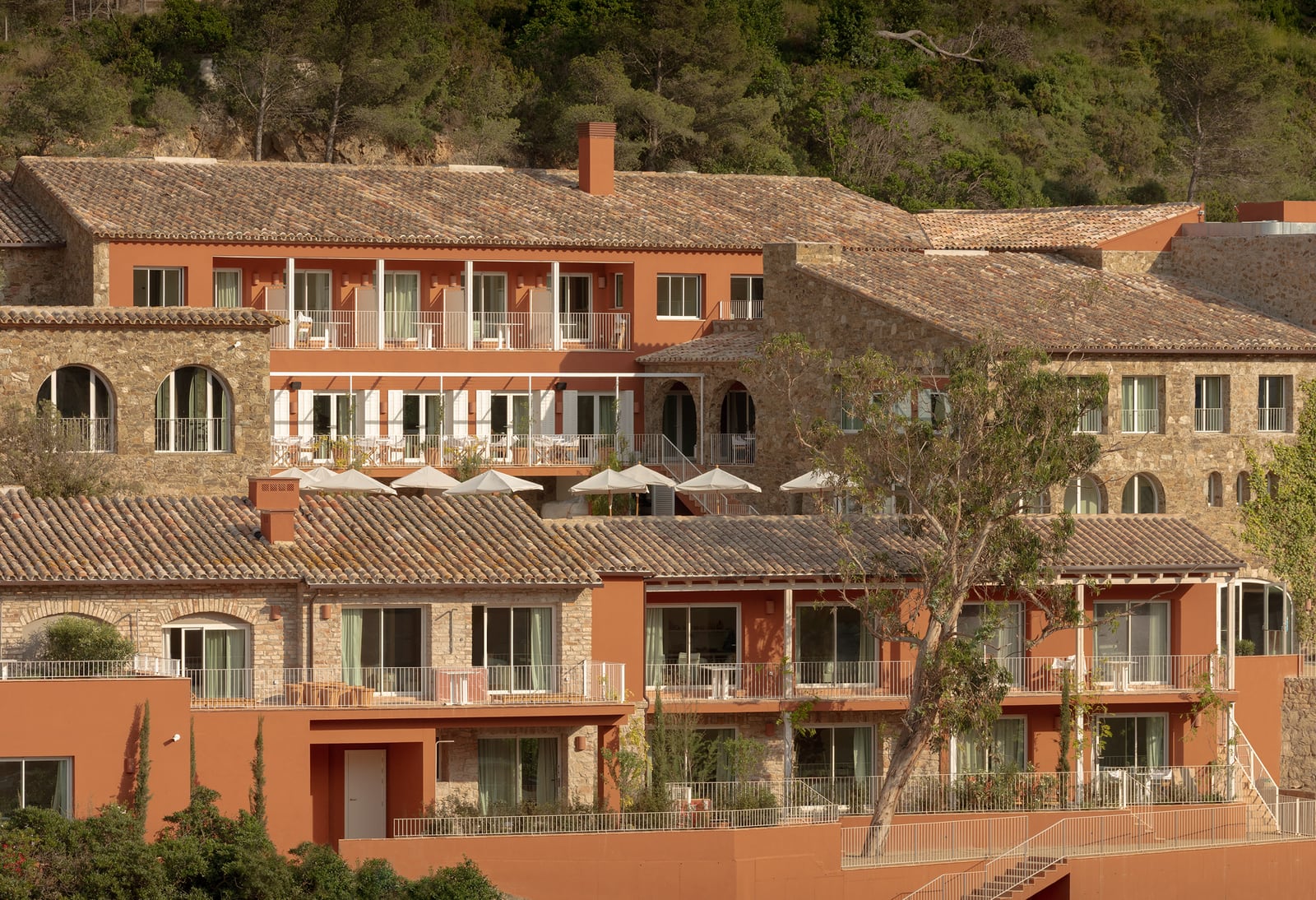
Hotel Aiguablava fits a trip organised around the southern coves. Its current room descriptions distinguish views over the bay, Fornells and the gardens, so book the view you actually value. Parador de Aiguablava offers a larger headland hotel in the same broad sector; compare the walking route to water and exact room orientation.
Aiguaclara in Begur trades direct access for dinners, terraces and the ability to choose a different cove each morning. It is the better base when the beaches form half the trip rather than all of it. For Sa Riera and the northern coves, Finca Victoria stands just above the beach: 38 rooms for adults and one MICHELIN Key, the only Key hotel in Begur. See the full Baix Empordà hotel guide for inland masias and the Palafrugell coast.

Families, swimming confidence and accessibility
Sa Riera is the simplest starting point for families because it offers more sand and conventional beach infrastructure. Aiguablava can look gentle in photographs, but its small size and busy access complicate a day with equipment. Platja Fonda involves steps; Aiguafreda is rocky. Conditions can change quickly, and no written guide replaces flags or lifeguard instructions.
Ask hotels about lifts, slopes, steps and the route from car park to room and water. ‘Beach access’ may involve a public path or substantial stairs. For reduced mobility, select the exact beach entrance and accommodation together rather than assuming that proximity on a map guarantees an easy route.
Two-day and four-day plans
- Two days: Sa Riera early on day one, then Begur castle and dinner; Aiguablava early on day two with Fornells on foot if conditions suit.
- Four days: add Sa Tuna with lunch, one selected Camí de Ronda section, and a non-beach day in Pals or Peratallada.
- From a cove hotel: spend two mornings at the nearest water rather than driving to collect names.
- From Begur town: use wind and the current bus timetable to choose one beach sector each day.
Best time for the coves
June and September usually provide the strongest mix of swimmable weather, open services and less pressure than the central school holidays. July and August suit travellers who want full summer energy and are willing to start early. Late May and October can be excellent for walking and lunch, but water, weather and operating hours are less dependable.
Do not promise yourself empty coves because the calendar says shoulder season. Weekends and warm forecasts change demand. The reliable strategy is still early access, one sector at a time and a backup chosen for different wind exposure.
What to check the day before
- Municipal beach-bus timetable and last return.
- Weather, wind, sea warnings and beach flags.
- Parking or access restrictions for the chosen sector.
- Restaurant opening and whether a beach lunch needs a reservation.
- Walking distance, elevation and footwear for the selected path.
- A second cove on another orientation, not another stop on the same crowded road.
Sources and editorial method
Updated 3 September 2026. Beach characteristics, signed routes and seasonal transport were checked against Begur's municipal tourism information. Hotel access and room-view claims were checked against current property pages. Reconfirm live transport, beach flags and access rules for your dates because they can change after publication.
Frequently asked questions
What are the three best coves in Begur?
For three different experiences, choose Sa Riera for the broadest family beach, Sa Tuna for fishermen's-cove atmosphere and Aiguablava for a small sandy cove with clear water. Visit them in separate half-days rather than driving between all three at noon.
Which Begur beach is best for families?
Sa Riera is the easiest general choice because it is Begur's largest beach and offers more conventional sand and services. Always check current sea conditions and ask about the exact access if travelling with a pushchair.
Is Aiguablava beach easy to park at?
Parking is under heavy pressure in summer because the cove is small and popular. Arrive early, consider Begur's seasonal beach bus and verify current municipal arrangements before setting out.
Can you walk between Begur's coves?
Some sectors connect via the Camí de Ronda, including the southern coast around Aiguablava, Fornells and Platja Fonda. The path is not uniformly easy; check the official route map, elevation and conditions for the section you plan.
Do you need a car for Begur beaches?
A car is useful outside high season and for regional touring. In summer, staying in Begur and using the municipal beach bus to Sa Riera, Sa Tuna and Aiguablava can be easier than parking.
Which is better, Sa Tuna or Sa Riera?
Sa Tuna is smaller and stronger for atmosphere and a focused swim or lunch. Sa Riera has more beach space and suits families or a longer day. Neither is reliably quiet at peak summer times.
Where should you stay for Aiguablava beach?
Hotel Aiguablava and Parador de Aiguablava occupy the southern coastal sector. Begur town is more flexible for restaurants and several beaches, but requires transport to every swim.
When is the best time to visit Begur's coves?
June and September usually balance swimming weather, open services and lighter pressure. July and August require early starts; late spring and October suit coastal walking but bring less dependable swimming conditions.