Where to stay in Tuscany: the best countryside hotels, castles and villas
An editors' guide to where to stay in Tuscany — how the Val d'Orcia, Chianti, the Maremma and Florence differ, and the restored castles, farms and villas our editors rate in each.
By The Unlisted Editorial Team · 25 July 2026 · 11 min read
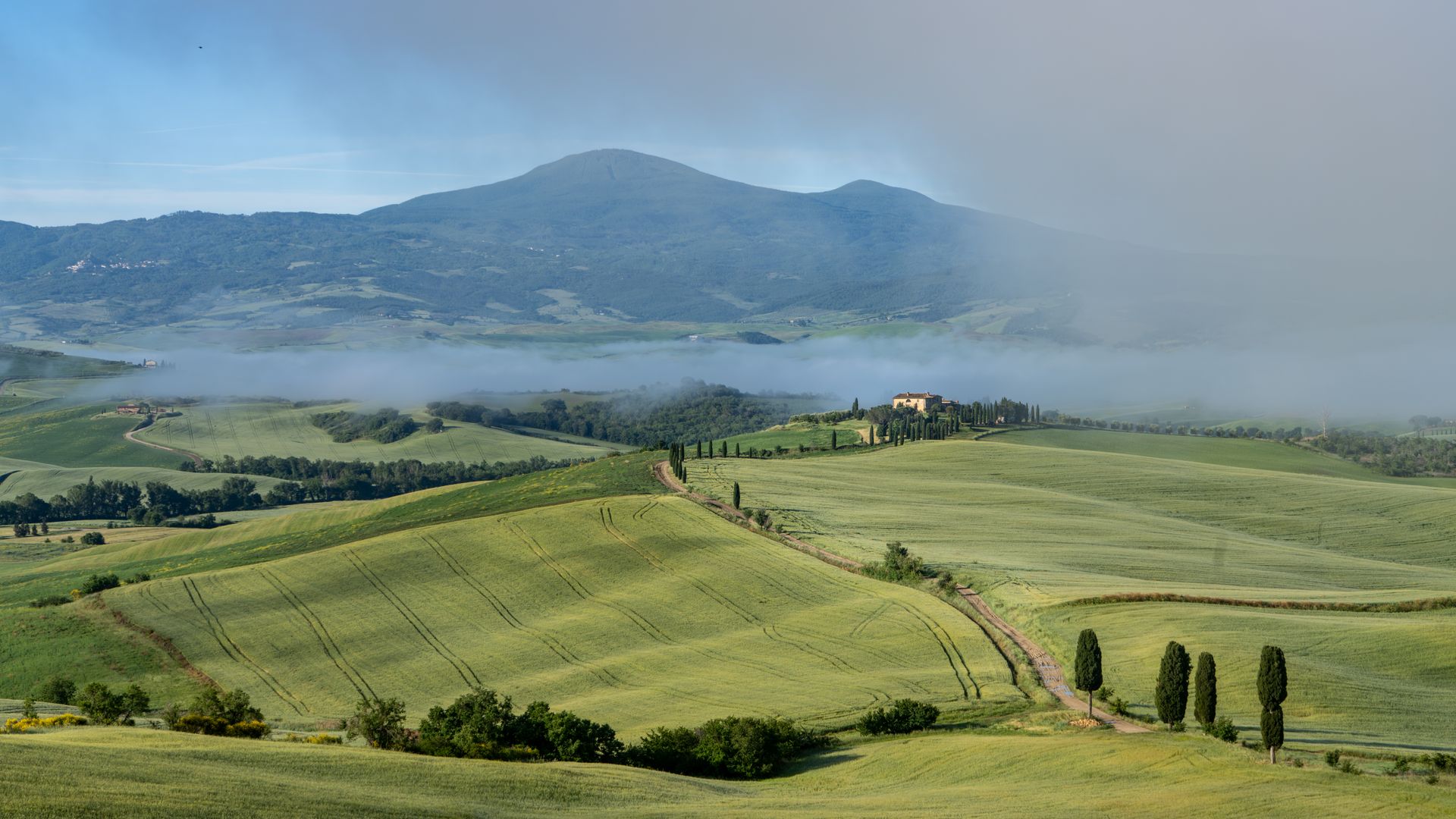
In short: for the postcard south, the Val d'Orcia around Montalcino — Castiglion del Bosco for a grand wine estate, Castello di Velona for a thermal-spa castle with the view. In Chianti, the castle-hotel COMO Castello del Nero. For farm-to-table calm, Borgo Santo Pietro in the Colline Senesi; for intimate and remote, Castello di Vicarello in the Maremma. And for the city, Villa San Michele above Florence. Late spring and early autumn are ideal.
Tuscany is less a single place than a set of landscapes that happen to share a region: the bare, rolling hills of the south, the vineyards of Chianti between Florence and Siena, the wilder Maremma near the coast, and Florence itself. Where you base yourself shapes the whole trip. This guide breaks Tuscany into the areas that matter, with the restored castles, farms and villas our editors rate in each.
Why Tuscany — and when to go
Tuscany's appeal is its balance — Renaissance cities and deep countryside, serious wine and simple food, all within an easy drive. The south around the Val d'Orcia is the classic image: cypress-lined roads, hilltop towns and golden light. Chianti is greener and more wooded; the Maremma, towards the coast, is wilder and less visited; and Florence anchors the north.
Go in late spring (May–June) or early autumn (September–October): warm days, long light and the vines either in leaf or turning. Midsummer is hot and busier around Florence and the honeypot towns; winter is quiet and green, with some country hotels closed. A car is close to essential for the countryside — the best places are down cypress lanes, not near stations.
Val d'Orcia: the postcard south
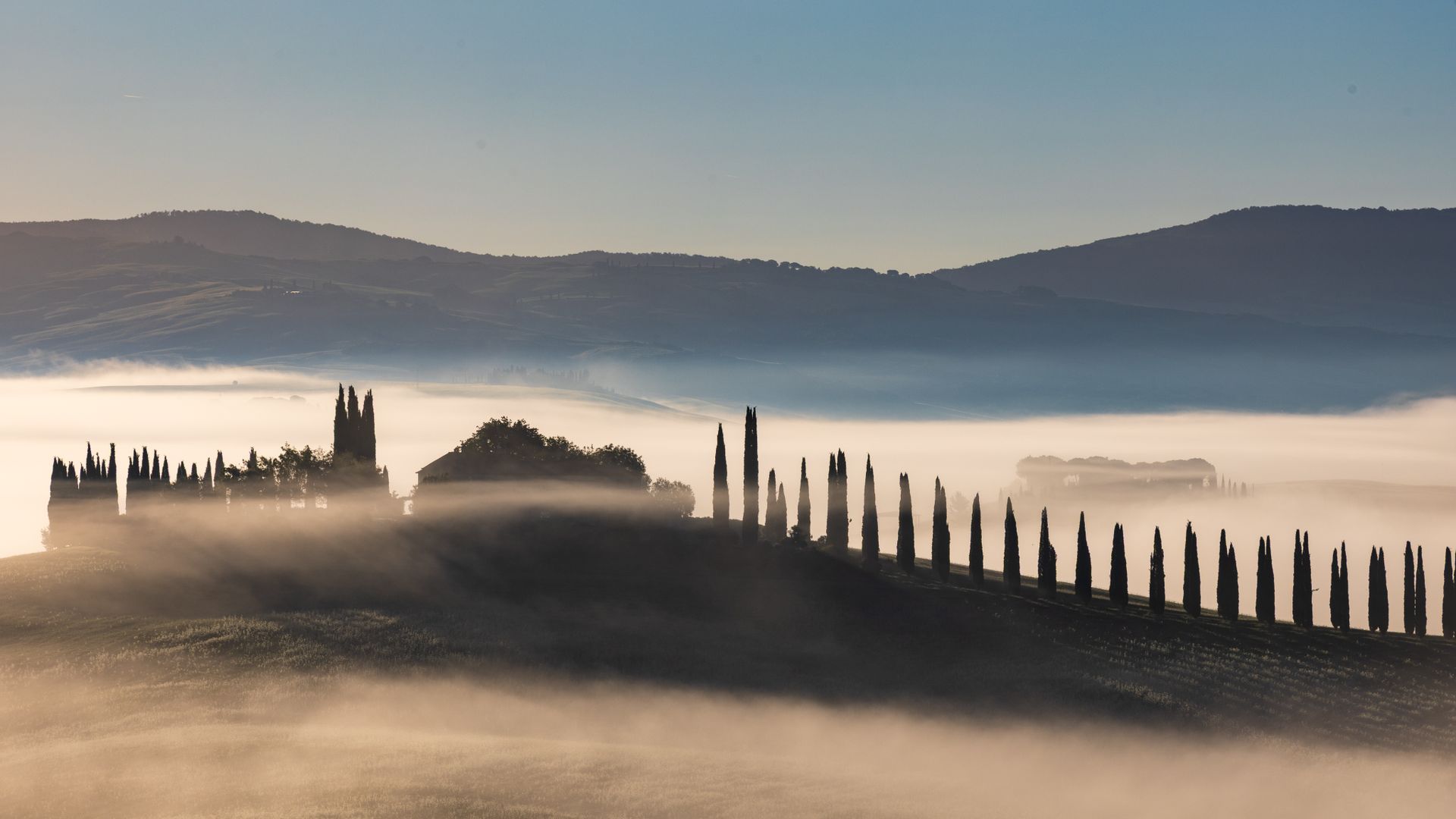
The Val d'Orcia, south of Siena around Montalcino and Pienza, is the Tuscany of the imagination — a UNESCO landscape of rolling hills, lone cypresses and stone villages, and the home of Brunello di Montalcino, one of Italy's great red wines.
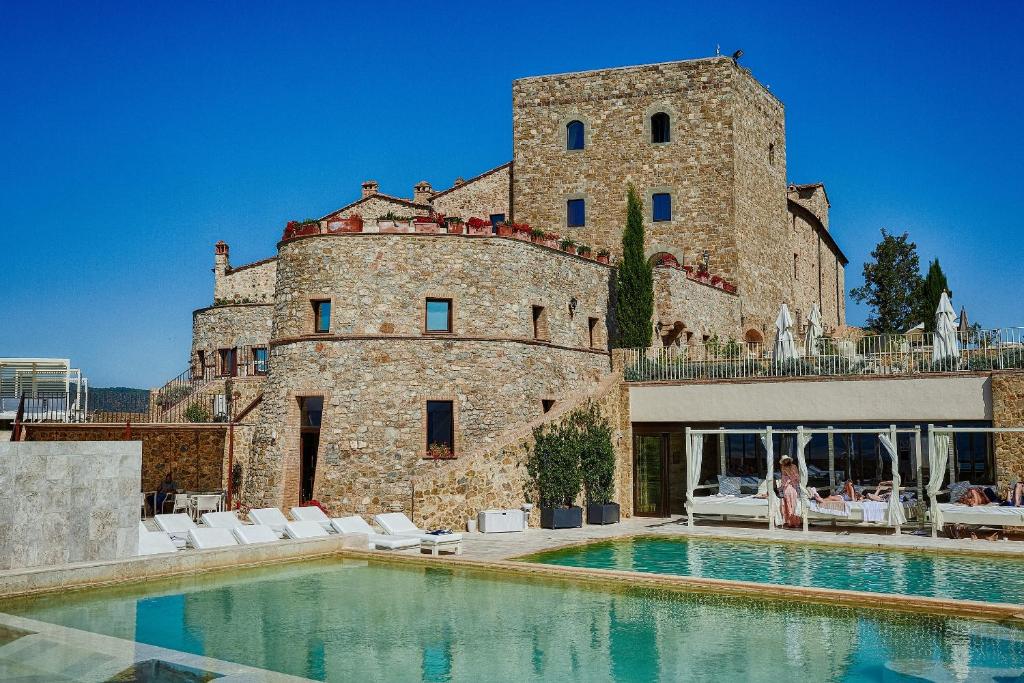
Castiglion del Bosco, a Rosewood hotel, is the grand option: a vast estate above Montalcino with suites and private villas, its own Brunello winery, a restaurant in the old farm buildings and a golf course, all wrapped in that landscape. For something more castle-like, Castello di Velona is an eleventh-century fortress turned resort with a thermal spa, a winery and a wide view over the valley — bigger and more resort-minded, and strong for the setting.
Chianti: between Florence and Siena
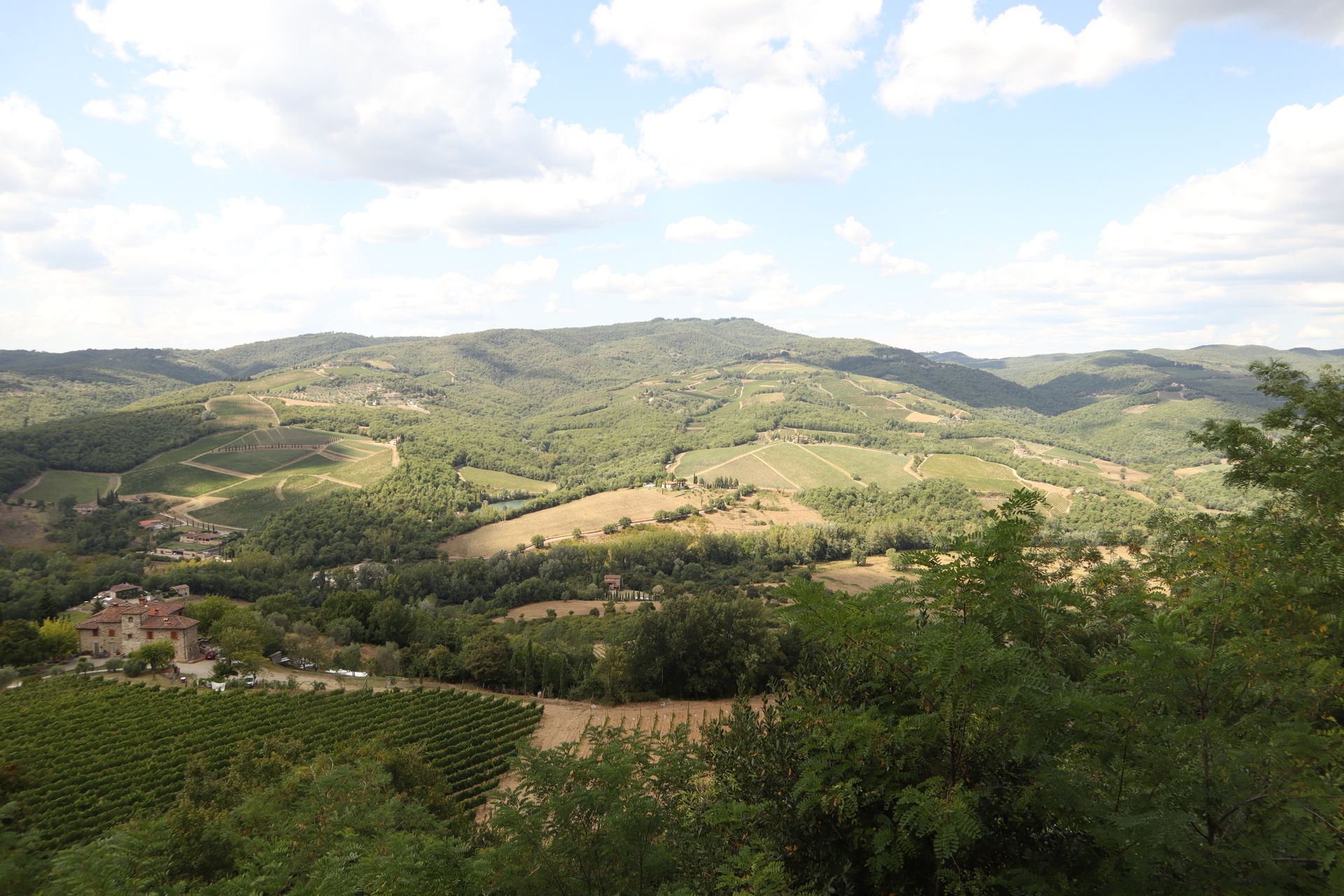
Chianti is the wooded, vine-striped country between Florence and Siena — the one you drive through on the old SR222 Chiantigiana, past stone villages, cellars and cypress avenues. It's central, green and made for slow days built around lunch and a tasting.
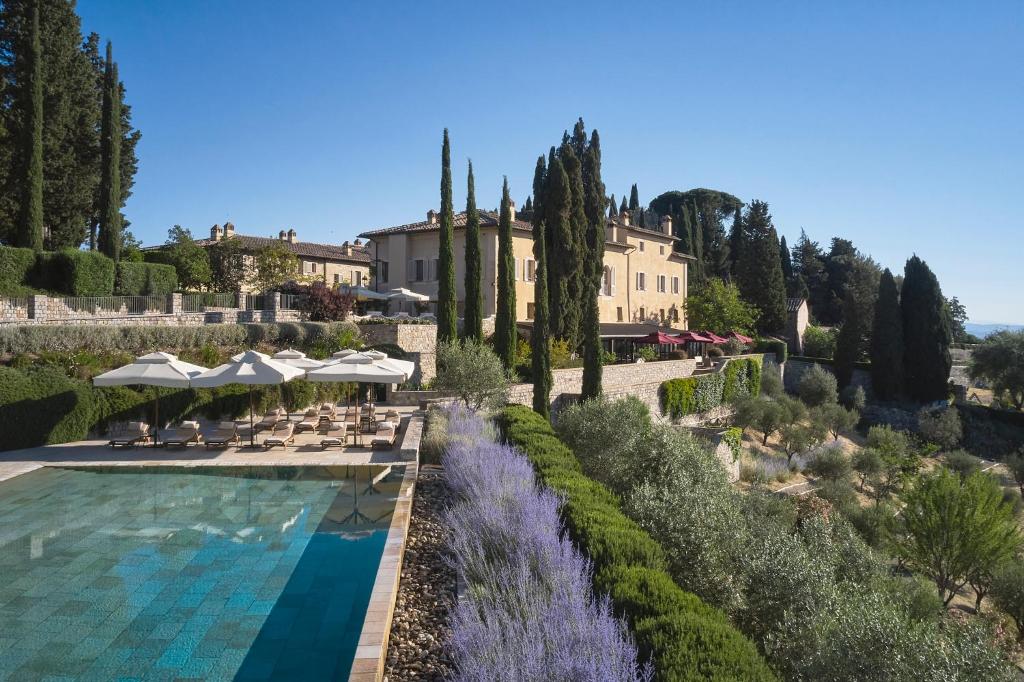
COMO Castello del Nero, near Tavarnelle Val di Pesa, is a twelfth-century castle turned hotel: frescoed rooms, a COMO Shambhala spa, a Michelin-starred restaurant and gardens looking over the hills. It makes an easy base for both cities and the wine roads between them.
The Colline Senesi and the Maremma
West and south of Siena the crowds thin. The Colline Senesi — the Sienese hills — hide one of Tuscany's most complete farm-to-table stays: Borgo Santo Pietro, near Chiusdino, a restored hamlet on a large organic farm that grows much of what its Michelin-starred kitchen cooks, with gardens, animals and a spa.
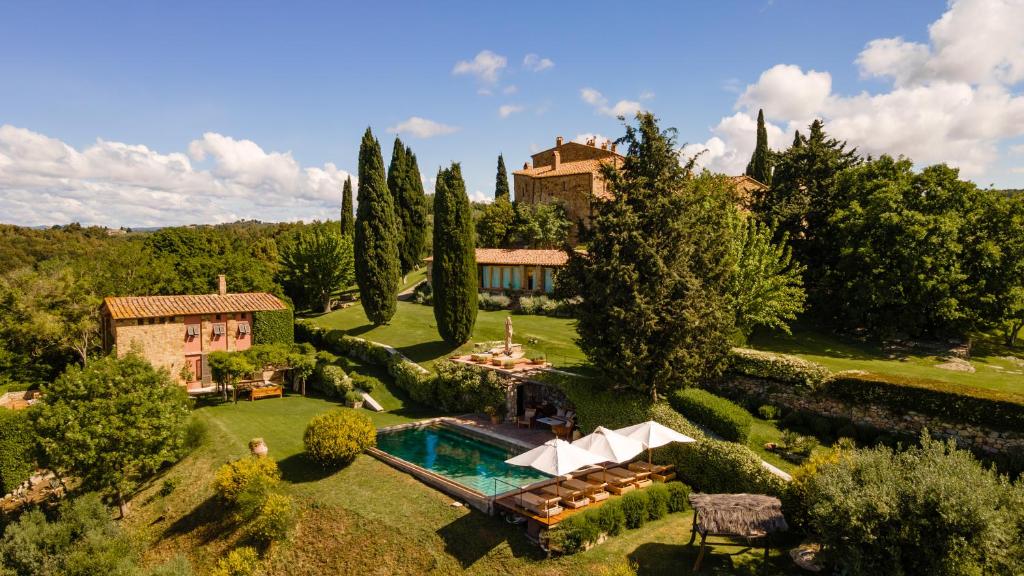
Further towards the coast, the Maremma is Tuscany's wilder, emptier corner. Castello di Vicarello, near Cinigiano, is a twelfth-century castle run as an intimate, family-owned retreat — a handful of suites, its own wine and oil, and the kind of quiet that's hard to find in the busier north.
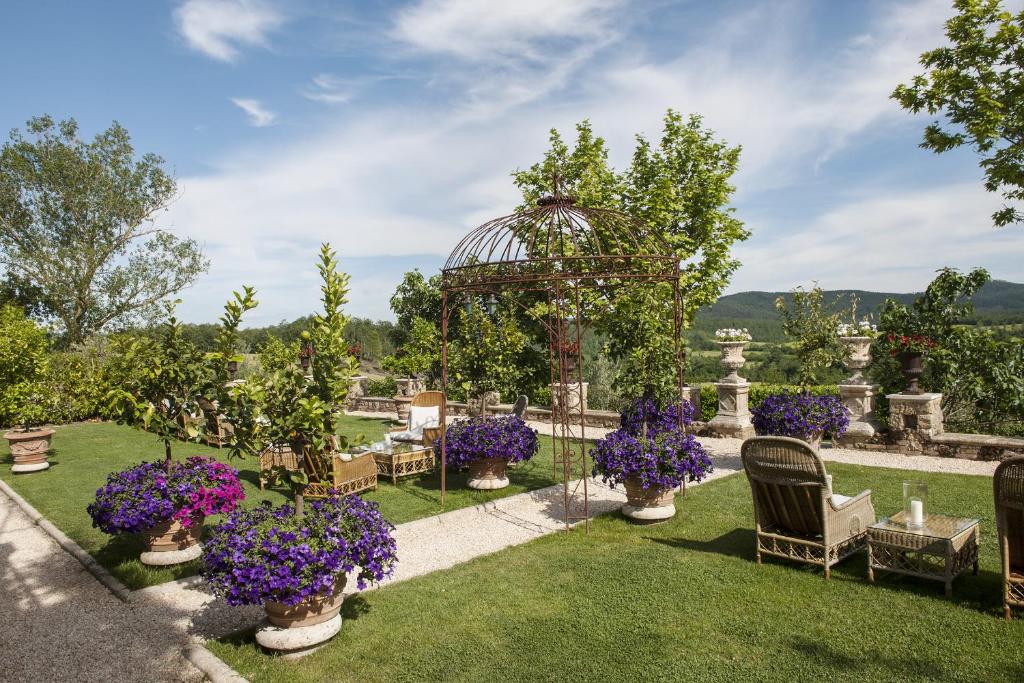
Florence and Fiesole
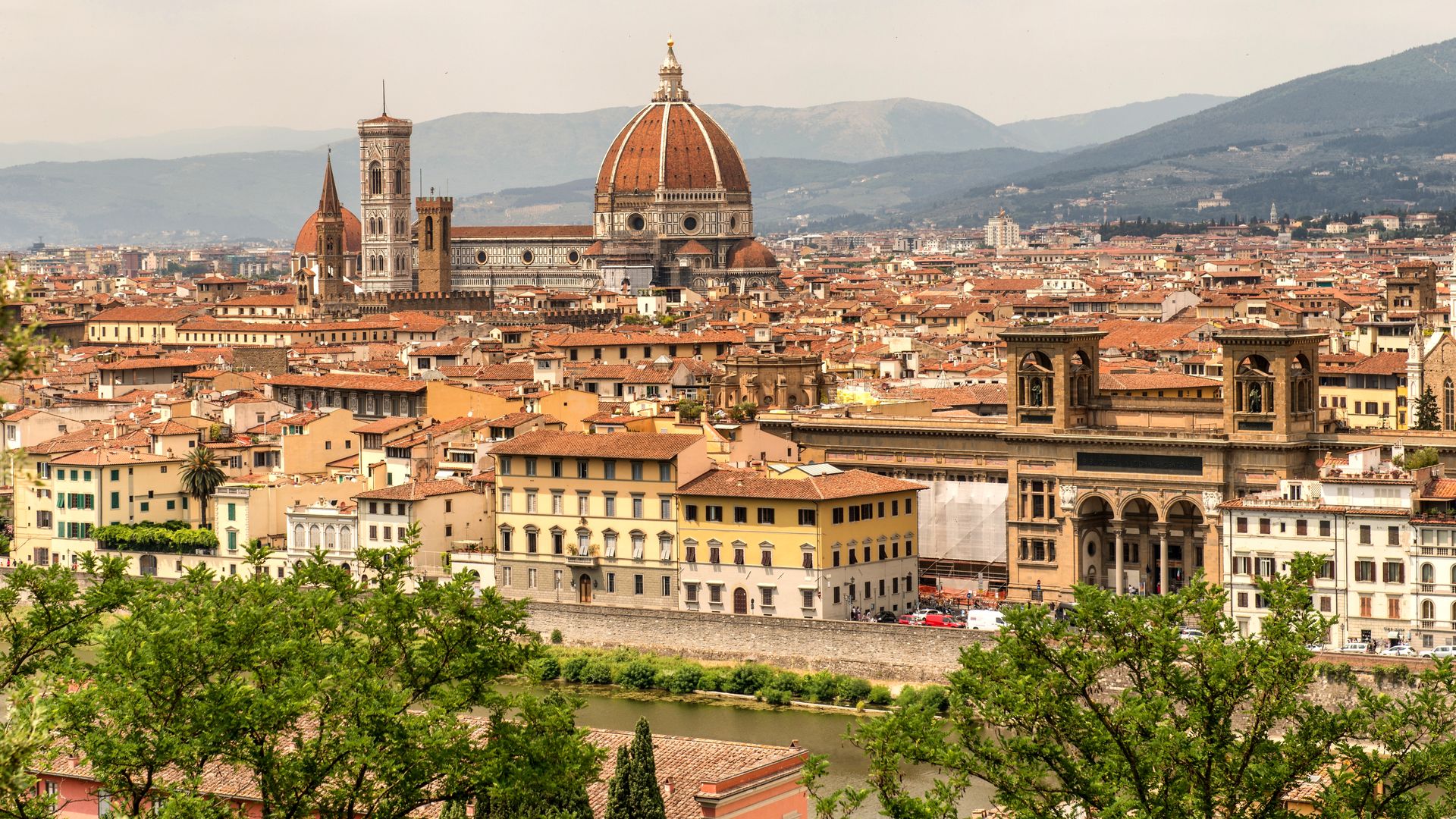
If you'd rather have the city on your doorstep, base above it. Fiesole, on the hillside just north of Florence, looks down over the domes and the Arno, ten minutes from the centre but a world quieter.
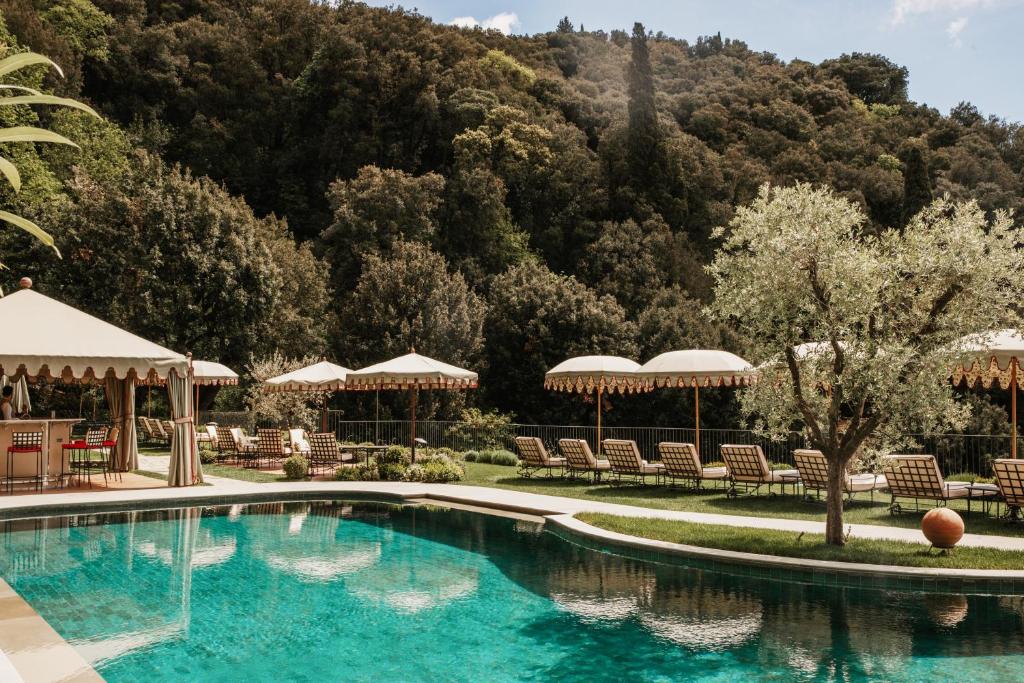
Villa San Michele, a Belmond hotel, sits there in a former fifteenth-century monastery with a façade attributed to Michelangelo, formal gardens and a loggia restaurant facing the city. It pairs Renaissance Florence — the Uffizi, the Duomo, the Oltrarno — with the calm of the hills each evening.
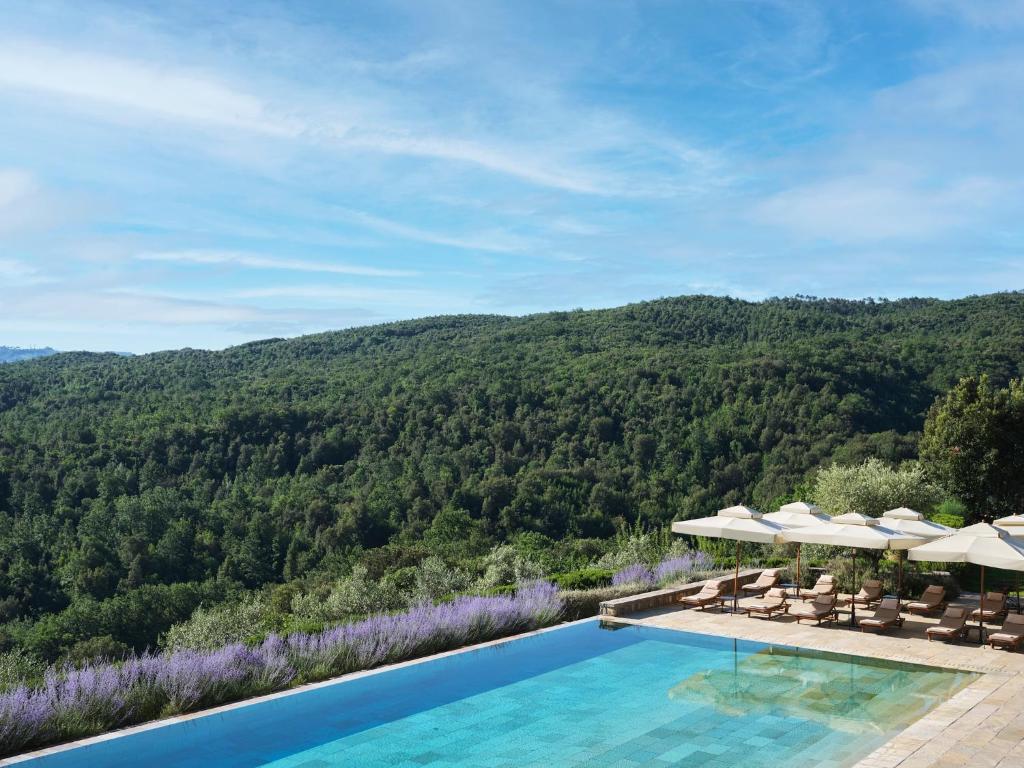
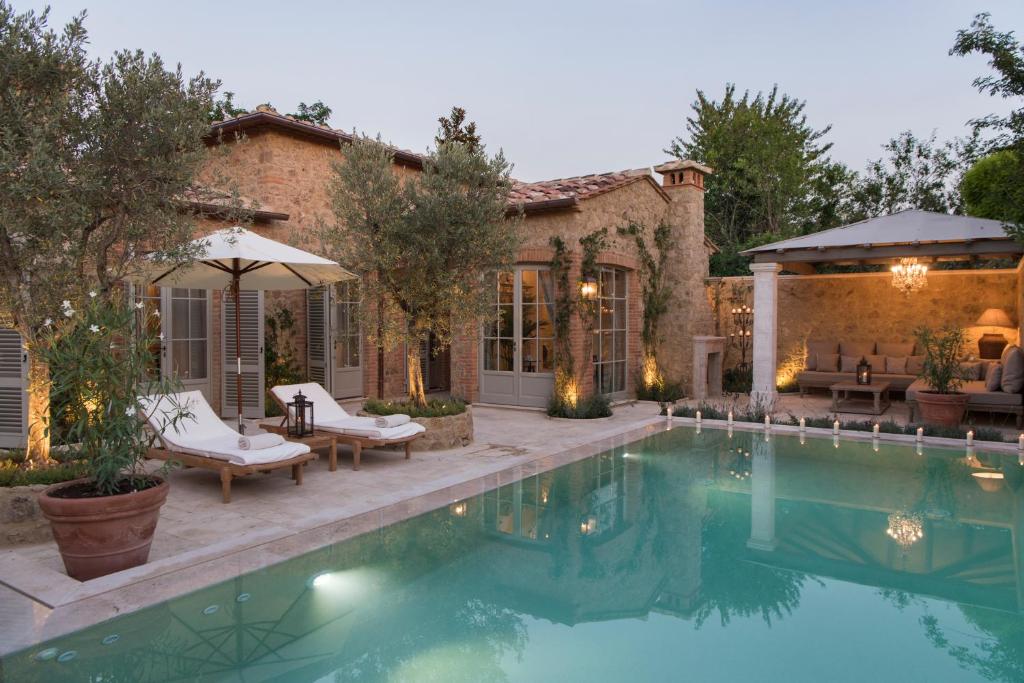
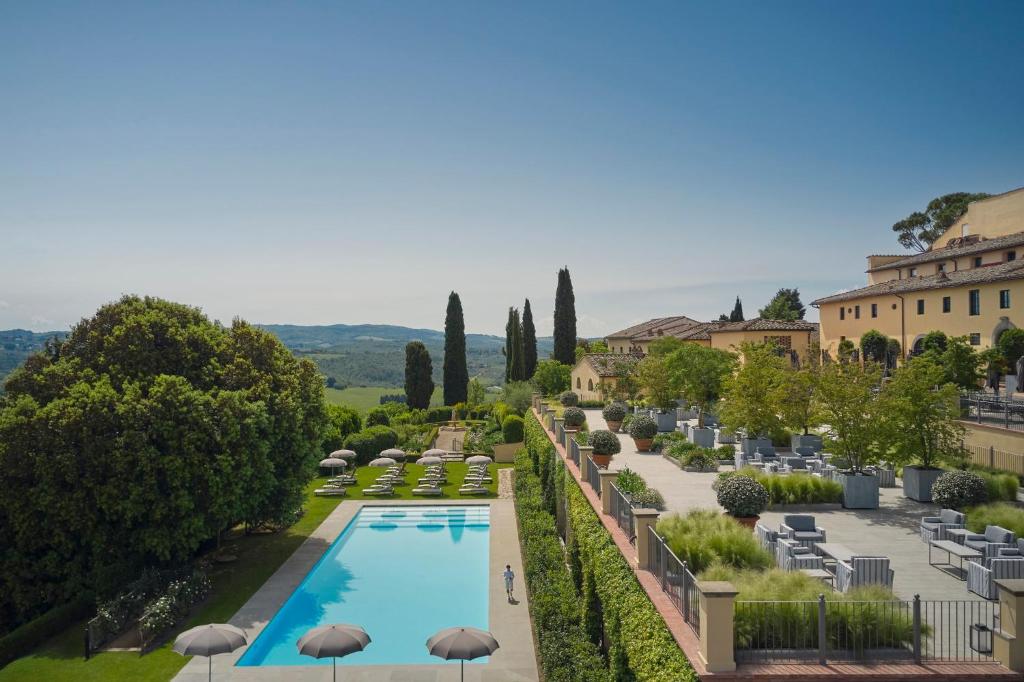
In the city itself, two hotels hold the Guide's highest distinction, three MICHELIN Keys. The Four Seasons Hotel Firenze fills two Renaissance palaces in Sant'Ambrogio around a private garden of 4.5 hectares with a pool, fifteen minutes' walk from the Duomo. Collegio alla Querce, a 16th-century college on the hill to the north, opened in 2025 with terraced gardens, a pool and its own shuttle into the centre.
How to choose, and getting around
For first-time Tuscany and the classic scenery, base in or near the Val d'Orcia and add a night or two in Florence. For wine and an easy reach of both cities, choose Chianti. For farm-to-table calm or real quiet, the Colline Senesi and the Maremma. And to put a great city on your doorstep, Fiesole above Florence.
Distances are short but roads are winding, so a car makes the countryside work; Florence, by contrast, is best done on foot with the car left at the hotel. Give the region four or five nights at least — a week easily splits between the south, a city and a slower rural base.
Frequently asked questions
Where is the best area to stay in Tuscany?
For the classic rolling-hills scenery, the Val d'Orcia around Montalcino and Pienza. For wine within reach of both Florence and Siena, Chianti. For farm-to-table calm, the Colline Senesi; for real quiet, the Maremma. And to be on Florence's doorstep, Fiesole on the hillside above the city.
What are the best countryside hotels in Tuscany?
Among the stays our editors rate: Castiglion del Bosco and Castello di Velona in the Val d'Orcia, COMO Castello del Nero in Chianti, Borgo Santo Pietro in the Sienese hills, Castello di Vicarello in the Maremma, and Villa San Michele above Florence — a mix of restored castles, farms and villas rather than large resorts.
When is the best time to visit Tuscany?
Late spring (May–June) and early autumn (September–October): warm days, long light and the vineyards at their best. Midsummer is hot and busier around Florence and the popular towns; winter is quiet and green, with some country hotels closed.
Do you need a car in Tuscany?
For the countryside, effectively yes — the best hotels are down rural lanes not served by public transport. Florence and the larger towns are best explored on foot, so many trips pair a city stay with a rural base and a hire car for the hills.
Which part of Tuscany is best for wine?
Chianti, between Florence and Siena, is the classic wine base; the Val d'Orcia around Montalcino is the home of Brunello, one of Italy's great reds. Several of our stays — Castiglion del Bosco, Castello di Velona, Castello di Vicarello — have their own vineyards.
Which Tuscan hotels have a MICHELIN Key?
Seven of ours: the Four Seasons Hotel Firenze and Collegio alla Querce in Florence, Borgo Santo Pietro and Castiglion del Bosco hold three Keys, the top of the Guide's scale, and Villa San Michele, COMO Castello del Nero and Castello di Vicarello hold one each. Tuscany has 45 Key hotels in the 2026 selection, more than any other Italian region; all of them, and the rest of Italy's 224, are in our MICHELIN Key guide to Italy.
Stays in this story
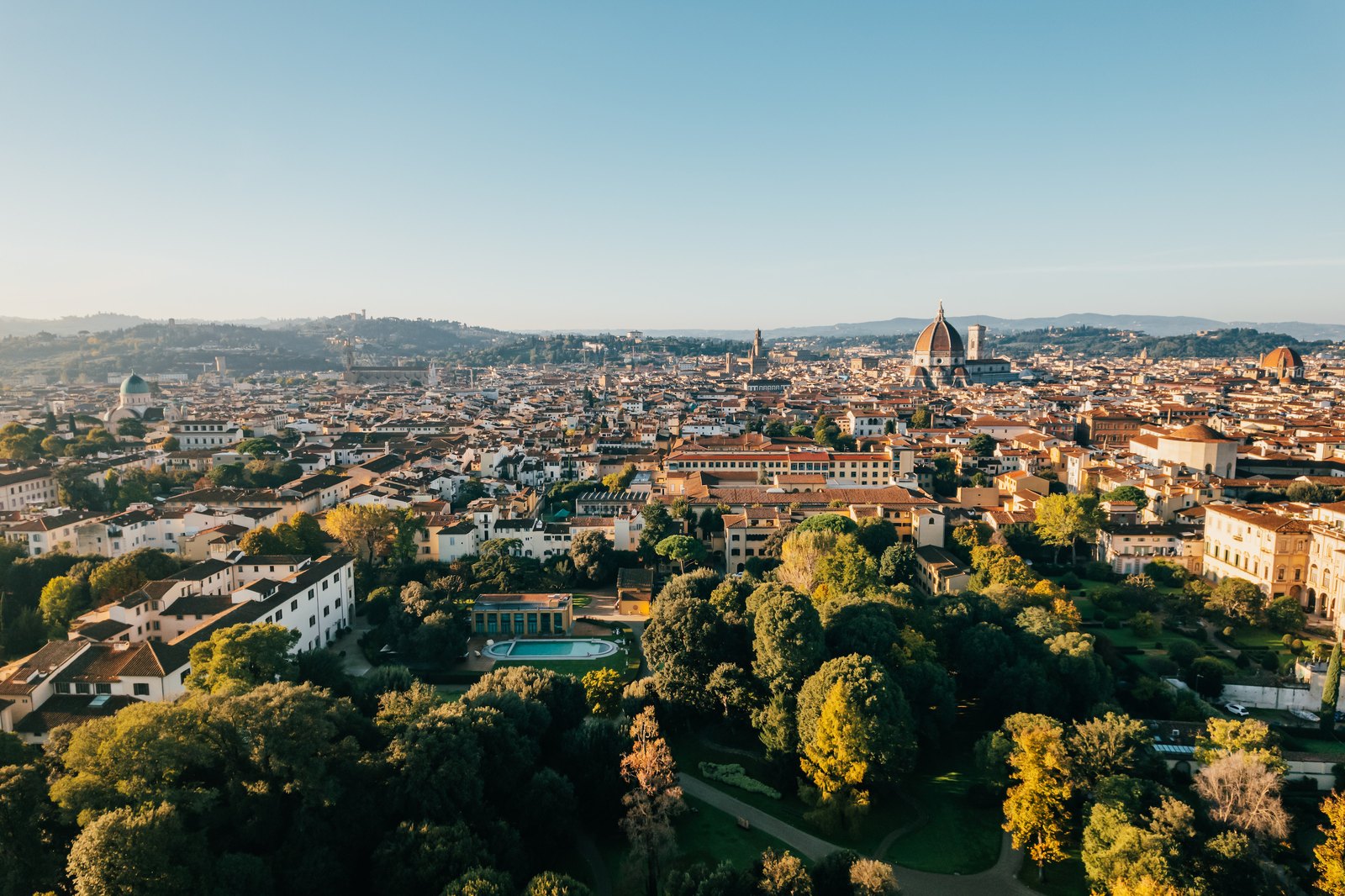
Four Seasons Hotel Firenze
Florence, Italy
from €1350 / night
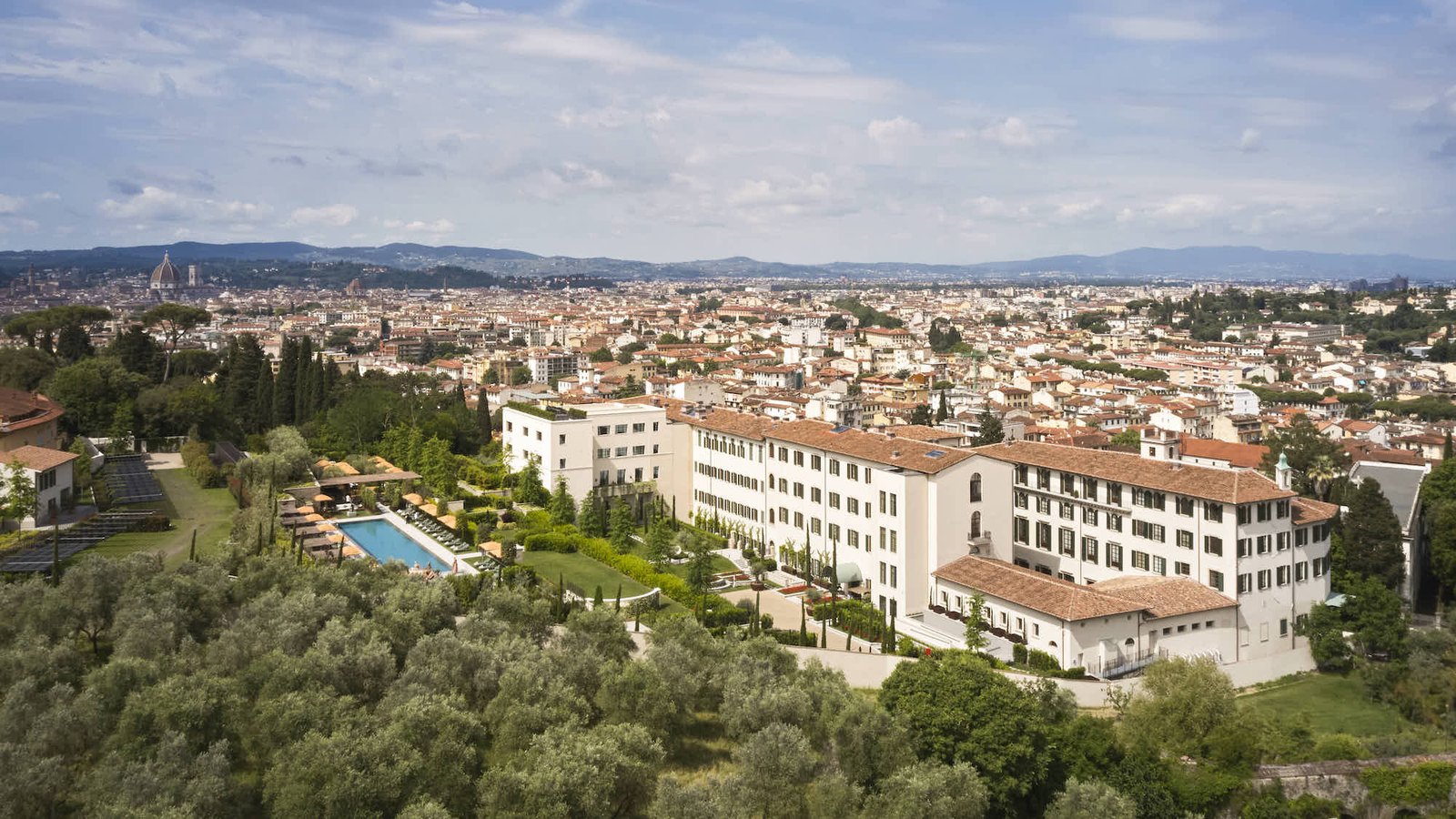
Collegio alla Querce, Auberge Collection
Florence, Italy
from €1150 / night