Where to stay in Córdoba: next to the Mezquita, or over a Roman villa
Córdoba is small enough to walk from anywhere, so the hotel is a bigger part of the trip than usual. Two houses, two completely different arguments.
By The Unlisted Editorial Team · 5 September 2026 · 7 min read
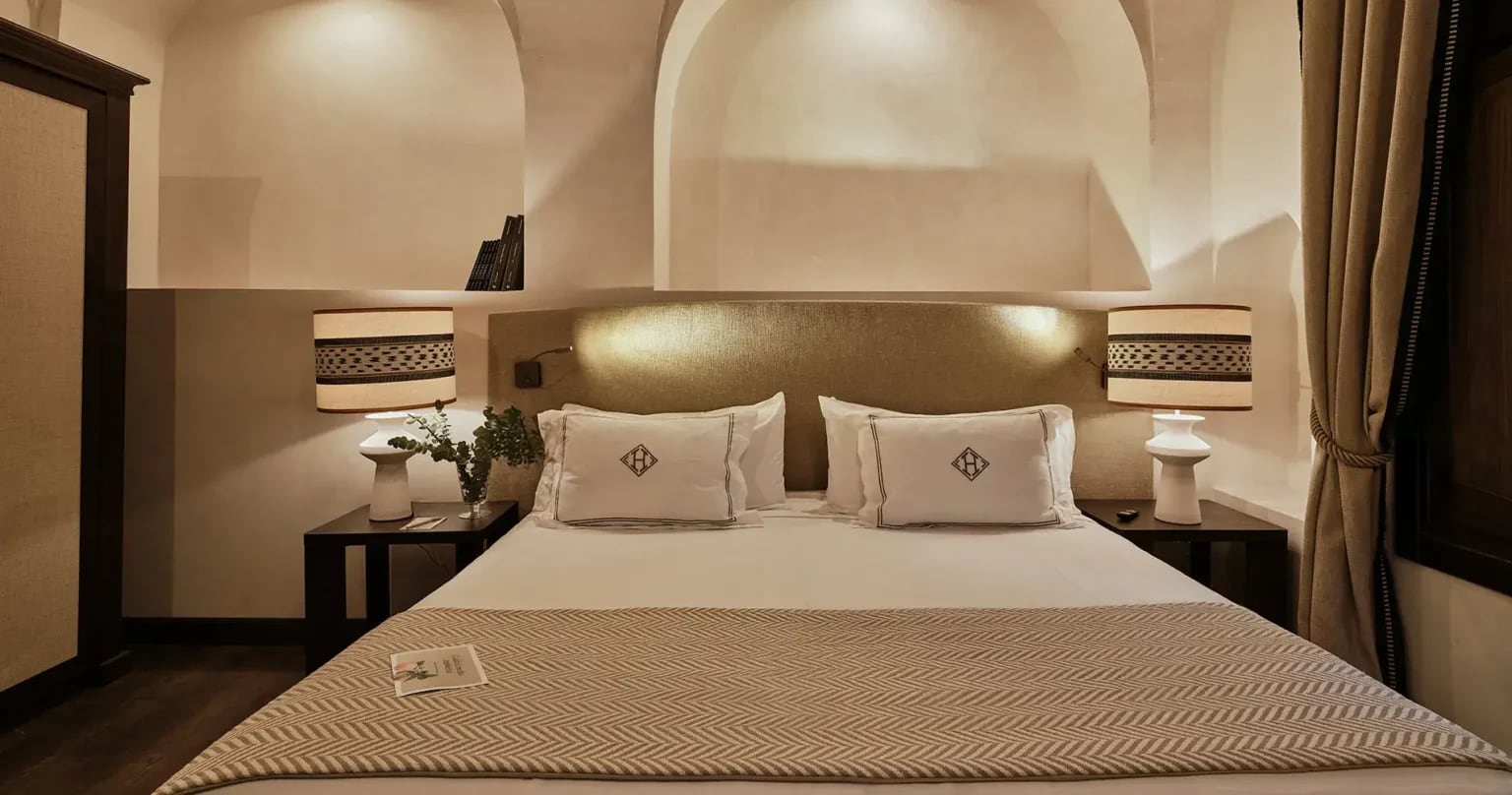
Choose Balcón de Córdoba for ten rooms twenty metres from the Mezquita in a 17th-century convent house full of Roman stonework, or Hospes Palacio del Bailío for a 16th-century palace with gardens, a pool and a glass floor over an excavated Roman villa. Two nights is usually enough.
Córdoba is a two-night city and a small one — you can walk from any reasonable hotel to the Mezquita in under twenty minutes. That changes the calculation. When the location argument mostly cancels out, the building has to carry the stay, and in Córdoba the buildings are extraordinary.
There are two genuinely distinctive houses here, and they are opposites: one is ten rooms and no facilities at the door of the monument, the other is fifty-three rooms with gardens and a pool a walk uphill away.
Balcón de Córdoba — the archaeological house
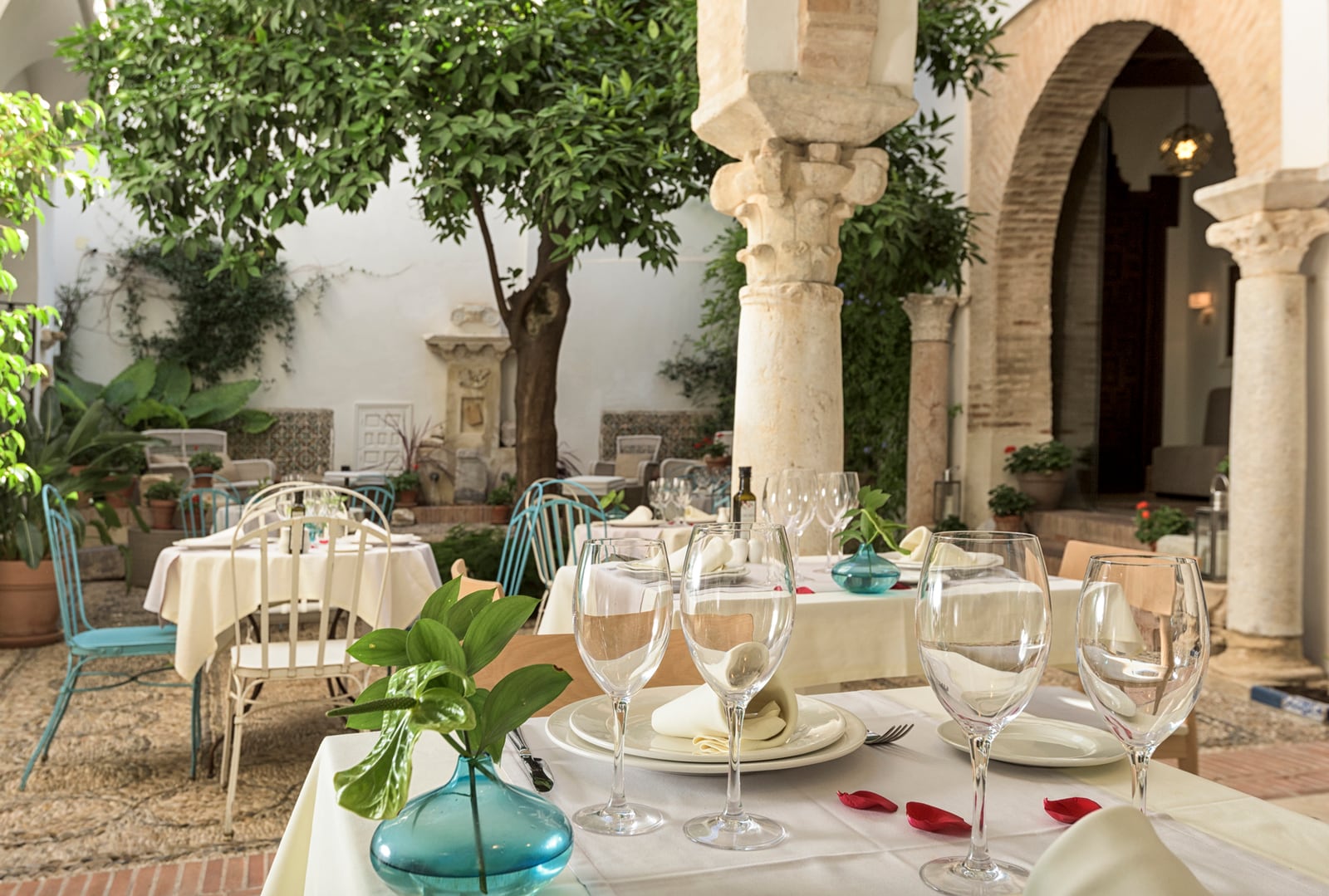
Balcón de Córdoba is ten rooms in a 17th-century house that was once part of the Church of the Encarnación, twenty metres from the Mezquita-Catedral. Its walls and three tiled courtyards carry over a hundred Roman and Hispano-Muslim carved pieces, restored with the Junta de Andalucía's archaeology department.
There is no restaurant, no pool and no lift in parts of the house. What there is: a rooftop looking straight at the cathedral, and a lane that empties completely once the day visitors leave. Suites 6 and 10 have private terraces, which in a house this size is a real difference.

Hospes Palacio del Bailío — the palace over the ruins
Hospes Palacio del Bailío is a 16th-century palace in the upper old town whose main courtyard has a glass floor over a Roman villa four and a half metres below. Fifty-three rooms around four courtyards, hand-painted stucco and centuries-old frescoes against deliberately modern furniture.
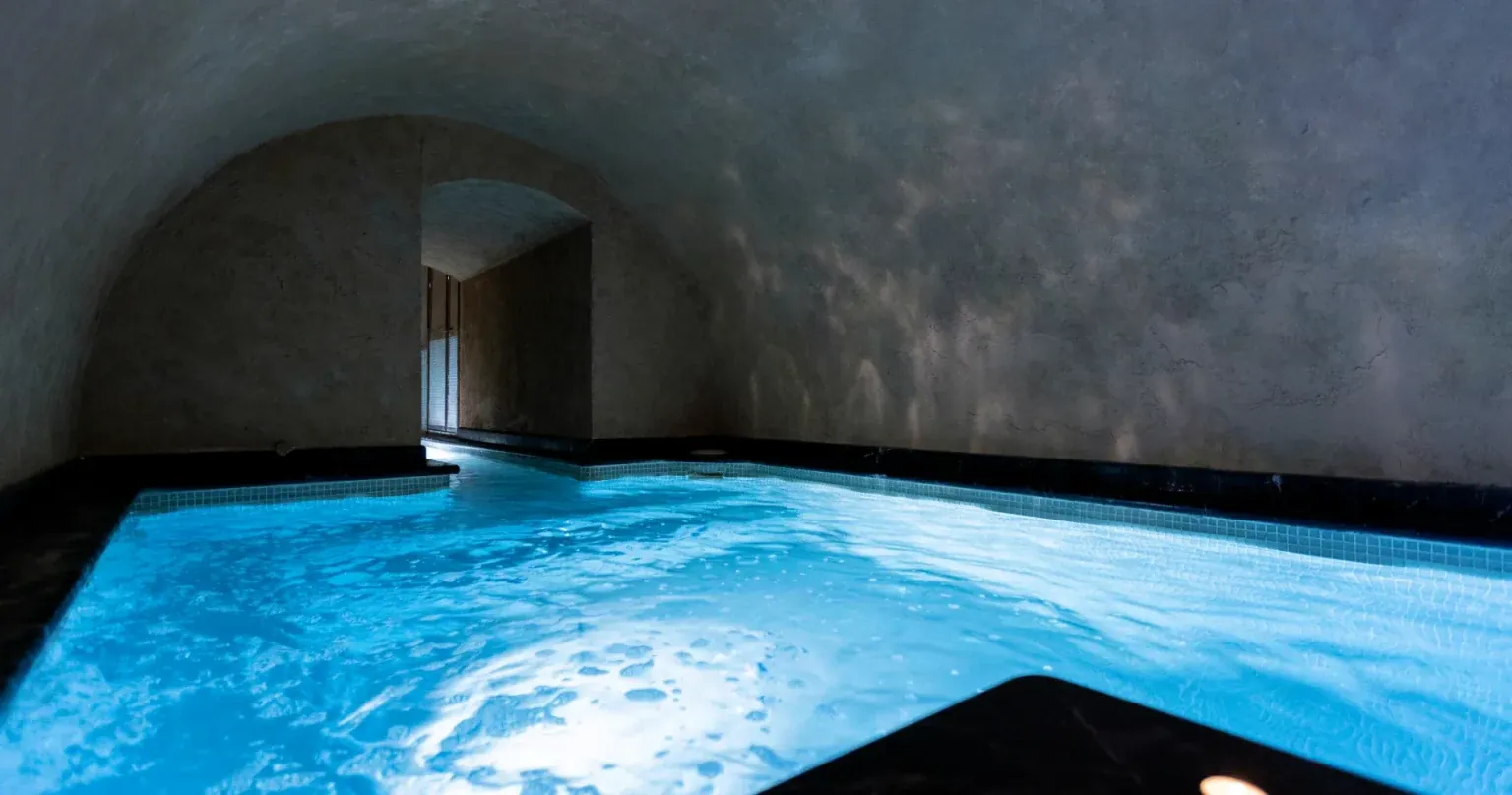
This is the full hotel: gardens, a pool, a spa in the vaults, and Arbequina, a restaurant good enough that staying in is a decision rather than a fallback. The trade is fifteen minutes' walk to the Mezquita and a courtyard that hosts events.
The Judería, or the upper town
The Judería puts you inside the monument's orbit, which matters more than it sounds: the quarter is packed by day and silent by nine, and being there for the silent half is most of the point. But the houses are small, and none of them has a pool.
The upper old town, around the Plaza de Don Gome, is residential and quiet all day. It is where the space is, so it is where the gardens and pools are. In July and August, when Córdoba passes 40 °C without much difficulty, that stops being a preference.
Timing, and how long to stay
March to May and September to October. The first half of May is the Patios festival, when private courtyards across the old town open to visitors — the city at its best and its fullest, and worth booking months ahead.
Two nights covers the Mezquita, the Alcázar and the Judería without rushing. A third makes sense for Medina Azahara or for the Patios. And if you are weighing this against the other city on the line, we have set them side by side in Seville or Córdoba.
Frequently asked questions
Is it better to stay in the Judería or elsewhere in Córdoba?
The Judería for proximity — the Mezquita is a few steps away and the quarter empties at night — but the houses there are small and generally have no pool. The upper old town near Plaza de Don Gome is quieter and residential, and it is where the palace hotels with gardens and pools are.
How many nights should you spend in Córdoba?
Two is enough for the Mezquita, the Alcázar and the Judería without rushing. A third makes sense in May during the Patios festival, or if you want to add Medina Azahara.
When is the Córdoba Patios festival?
The first half of May. Private courtyards across the old town open to visitors; the city is at its most beautiful and at its fullest, and rates climb steeply. Book several months ahead.
Can you visit Córdoba as a day trip from Seville?
You can — the AVE takes about forty-five minutes — but the city empties of visitors in the evening, which is when the Judería is worth being in. One night turns a queue into a walk.