Where to stay in Seville: four MICHELIN Key hotels, and how to pick your quarter
In Seville the architecture is a given — nearly every good hotel is a courtyard house with a roof terrace. What actually decides the stay is the quarter and the size of the house.
By The Unlisted Editorial Team · Updated 13 September 2026 · 10 min read
Choose Mercer Sevilla for the best-executed small house in the city, in quiet El Arenal; CoolRooms Palacio de Villapanés for a 1729 baroque palace and a rooftop looking at the Giralda, at a gentler rate; Vincci Selección Unuk for a rooftop infinity pool by the Setas; or Cavalta for twelve rooms in Triana, across the river. All four hold a MICHELIN Key.
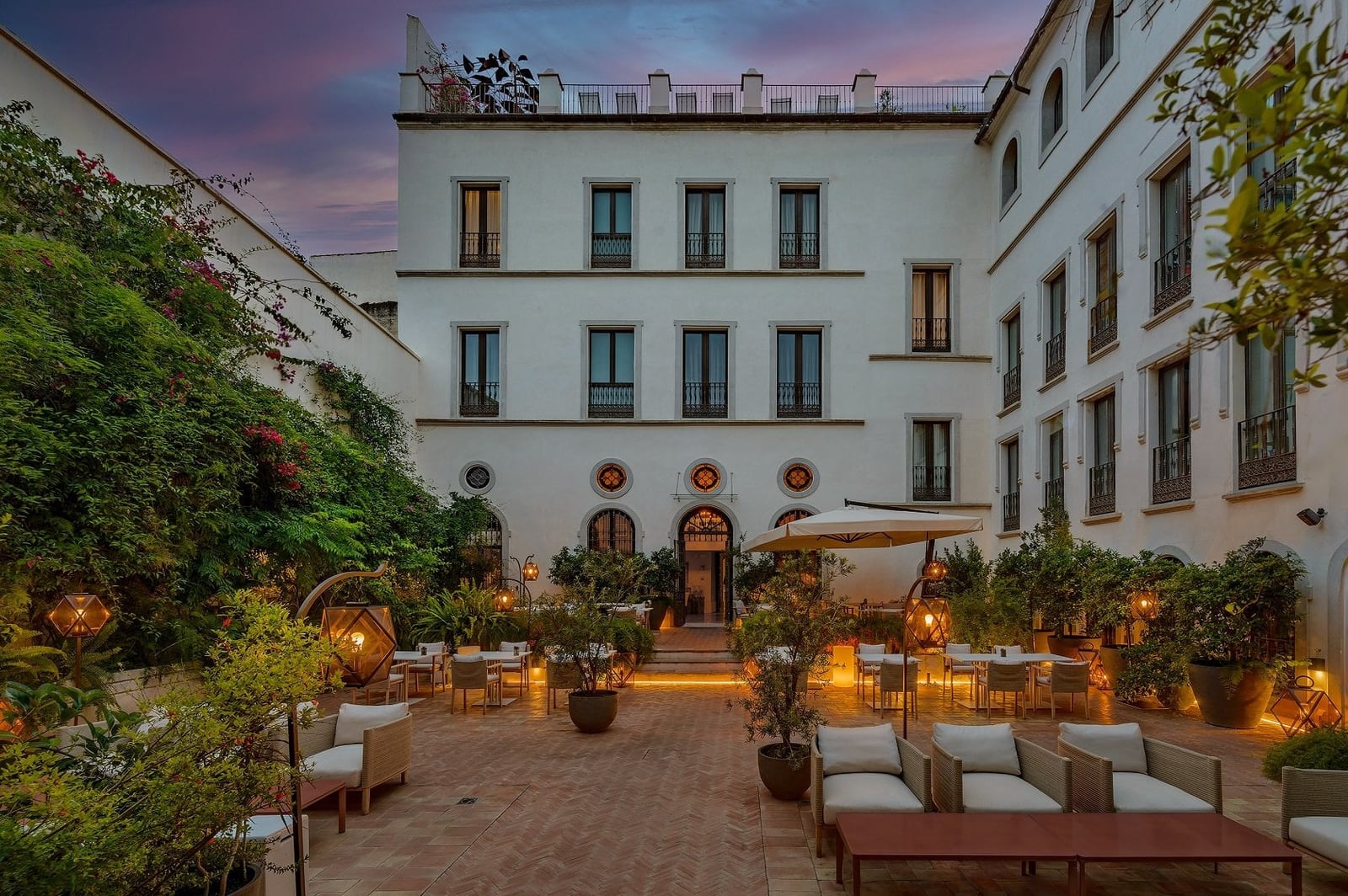
Seville makes hotel choice unusually easy and unusually hard at the same time. Easy, because the format barely varies: a casa palacio built around a courtyard, restored, with the flat roof turned into a terrace and often a plunge pool. Hard, because a dozen of them are genuinely good, and the photographs all look alike.
So the decision is not really about the building. It is about which quarter you want to walk out into, and how big a house you want to be in. This guide is based on independent editorial research, official hotel information and verified guest feedback rather than first-person stays.
The quarters, in one paragraph each
**Santa Cruz and the Alfalfa** are the old quarter — the cathedral, the Alcázar, the lanes people picture. Everything is a five-minute walk and the trade is noise, crowds and cobbles you will drag a suitcase over. The one hotel we list at its edge is Vincci Selección Unuk, by the Setas of the Encarnación — a modern five-star rather than an old house; most of the houses inside are charming and, by Spanish category, a good deal smaller in stars than the rest of this catalogue.
**El Arenal** sits between the river and the cathedral, the old port district. Two or three streets is all that separates it from Santa Cruz, and those streets are the difference between an evening of church bells and an evening of hen parties.
**San Bartolomé**, east of the centre, is the old Jewish quarter and the quietest of the three. Ten minutes on foot to the cathedral, residential, and where the largest palaces are.
**Triana**, across the Guadalquivir, is the quarter of potters, flamenco and tapas bars — the most local Seville, and about twenty minutes on foot from the cathedral over the Triana Bridge.
Mercer Sevilla — the small one, done properly
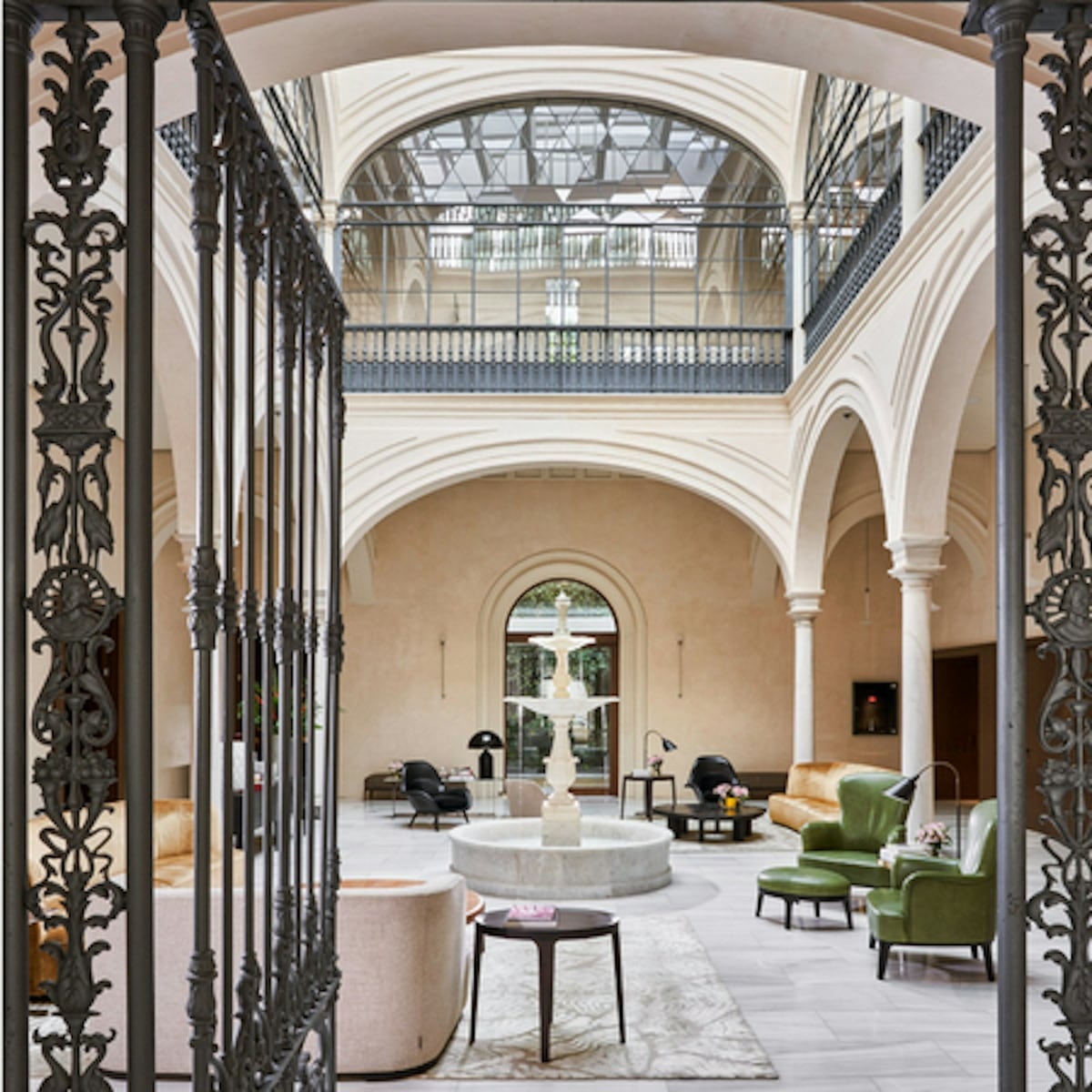
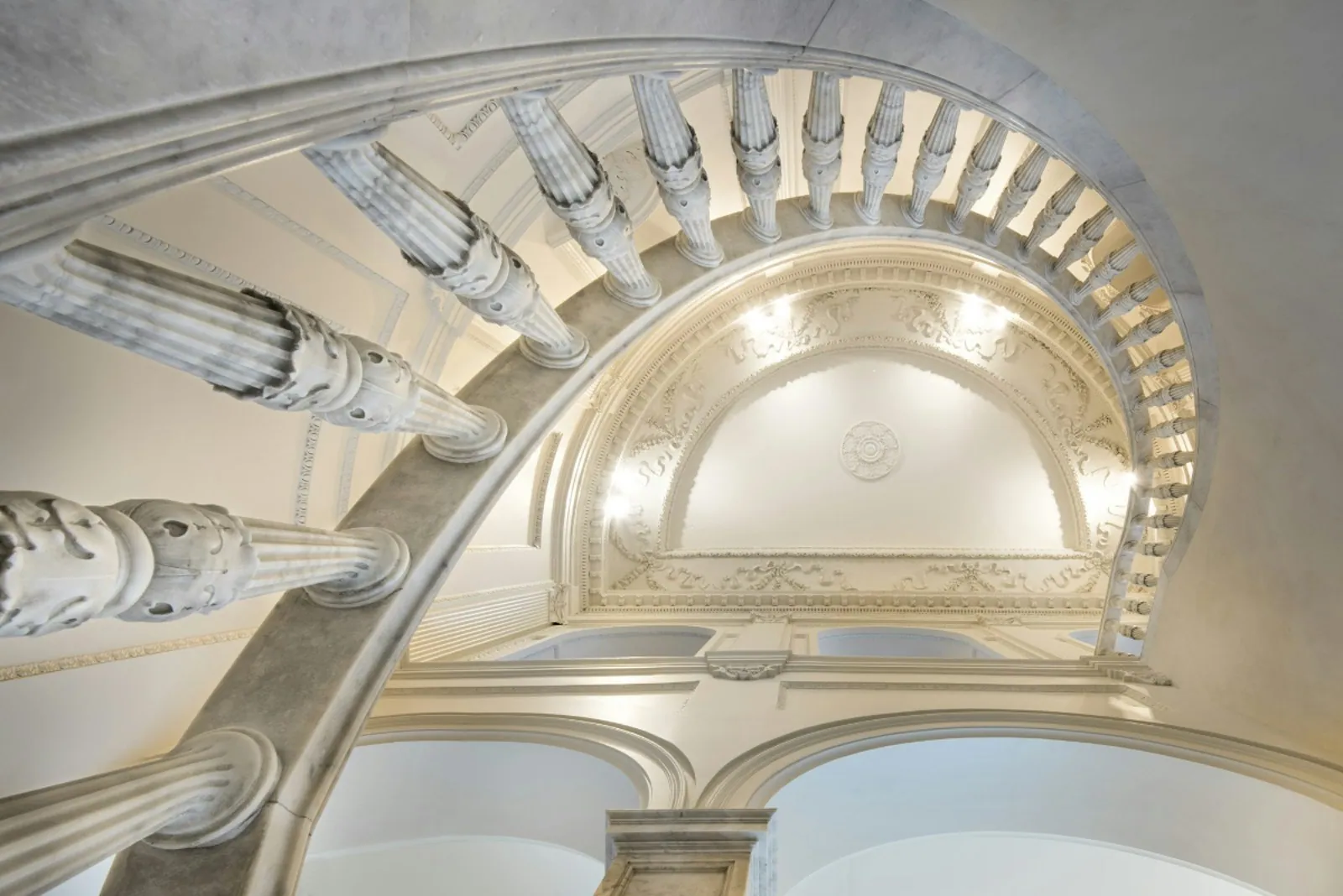
Mercer Sevilla occupies the Casa Palacio Castelar, an 1880 mansion in El Arenal restored by Cruz y Ortiz. Eleven rooms and suites, a central patio under a glass dome, a staircase that is a piece of architecture on its own, and a plunge pool on the roof.
It is a five-star gran lujo with twelve keys and a MICHELIN Key, which shows in the service and in the rate. If you want the best-run historic house in Seville and you do not need a spa or a big restaurant, this is it.
Palacio de Villapanés — the palace, and the roof
CoolRooms Palacio de Villapanés is the baroque palace built in 1729 for Admiral López-Pintado and protected since 2009 as one of the city's principal 18th-century buildings. Fifty rooms around the courtyard, a basement sauna, and a roof terrace with a seasonal plunge pool and an uninterrupted line to the Giralda.
Fifty rooms and an events calendar mean it is the less private of the two, and the main patio feels it on a Saturday. What you get in exchange is genuine palace architecture, its own MICHELIN Key, and a rate a twelve-room house cannot approach.
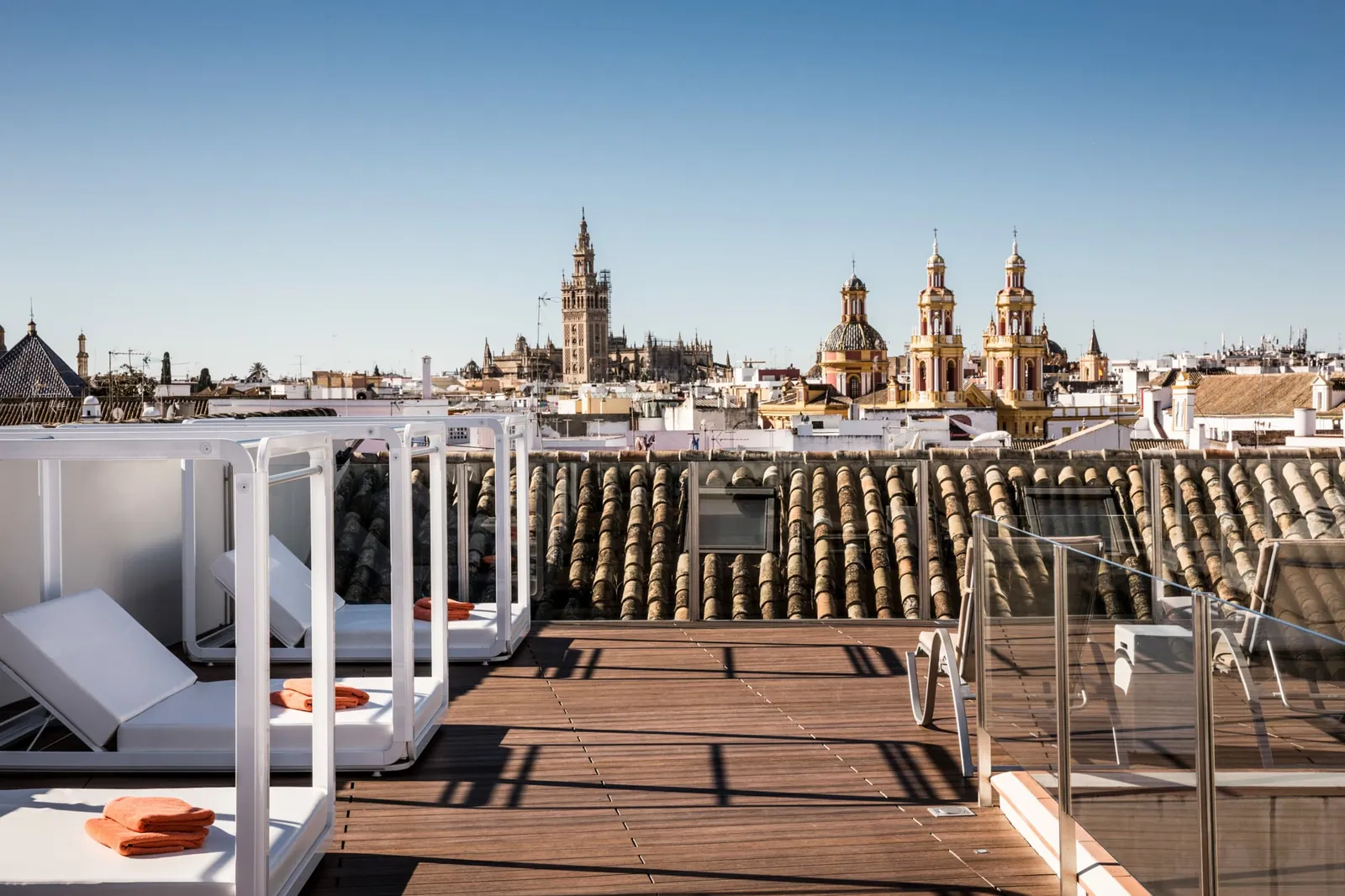
Vincci Selección Unuk — the rooftop pool
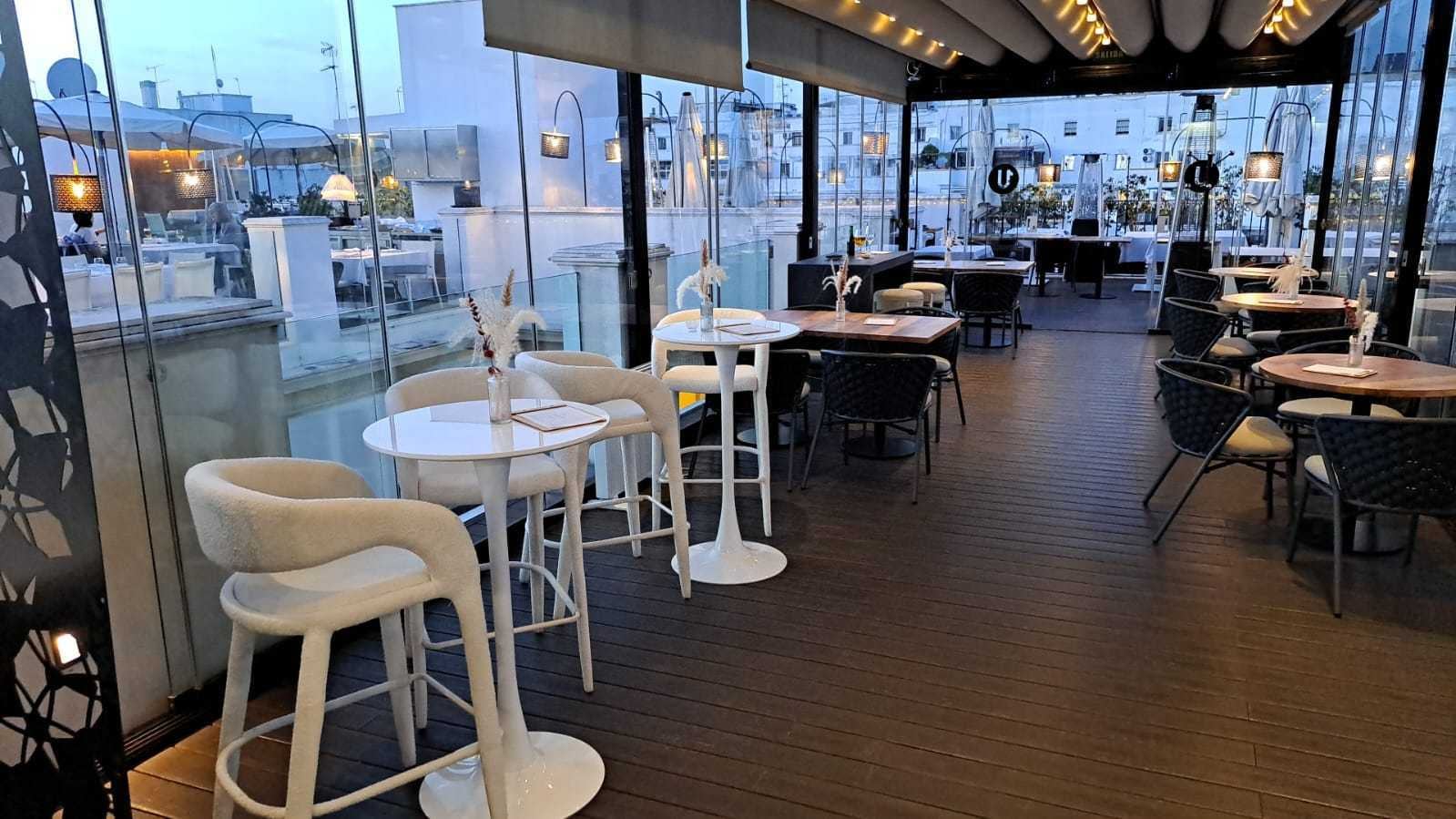
Vincci Selección Unuk is the exception to the casa palacio rule: a contemporary five-star gran lujo of thirty-four rooms on the Calle Ortiz de Zúñiga, by the Setas of the Plaza de la Encarnación, with Roman columns built into the design. Its rooftop infinity pool is the best place to swim in the old town, and Recoveco is the restaurant.
It holds a MICHELIN Key. Choose it in the hot months, or if you want junior suites with a terrace — some with their own hot tub — rather than an old courtyard. It is the least historic of the four; that is the point.
Cavalta — Triana
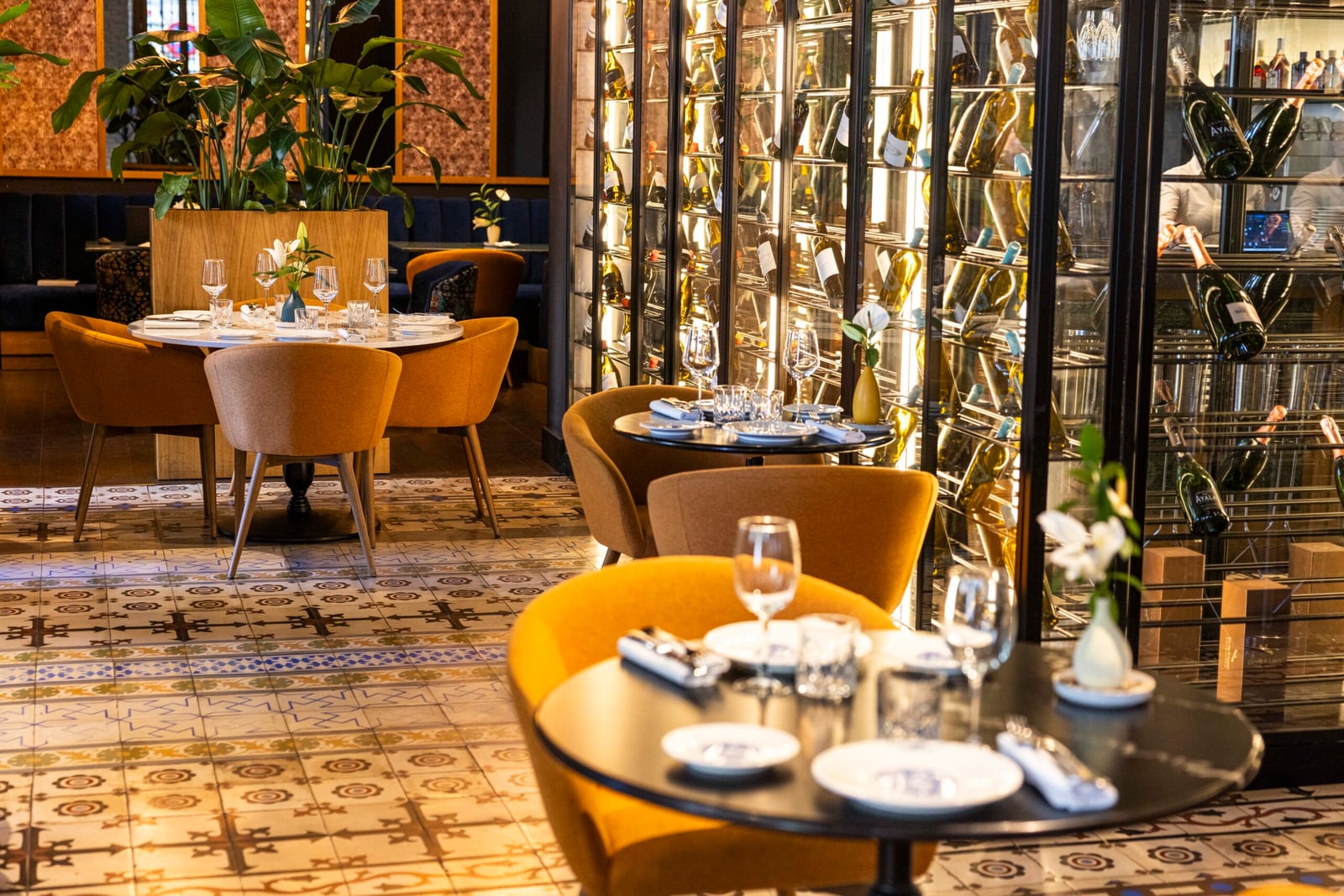
Cavalta has twelve rooms in an early 20th-century building on the Calle San Jacinto, the first gran lujo hotel on the Triana side. Rooms have high ceilings, restored brick and, in the Gran Deluxe category, wrought-iron balconies; Balbuena y Huertas cooks seasonal Andalusian food downstairs, and the Alzalí Garden Club on the roof has a small pool.
It holds a MICHELIN Key and a Small Luxury Hotels membership. Stay here to live in Triana — the market, the ceramics workshops, the river at night — and accept a twenty-minute walk to the cathedral.
When to come, and when not to
March to May and October to November are the months. April is its own category: Semana Santa and the Feria are extraordinary, and the city is full, slow and two or three times the price.
July and August are the ones to avoid. Seville regularly passes 40 °C, much of the city closes in the afternoon, and a rooftop plunge pool starts to look less like a luxury and more like infrastructure.
No car. The centre is pedestrianised, hotel parking is scarce and valet, and the AVE puts Madrid at two and a half hours and Córdoba at forty-five minutes — which raises the obvious question, answered in Seville or Córdoba. Granada, an hour and a half further on, has its own guide.
Frequently asked questions
Which area of Seville should you stay in?
Santa Cruz and the Alfalfa for the shortest walks, at the cost of night noise. El Arenal, between the river and the cathedral, is quieter and still central. San Bartolomé, east of the centre, is the calmest and about ten minutes from the cathedral on foot. Triana, across the river, is the most local quarter and about twenty minutes away.
Are Seville's hotels all in old palaces?
The good small ones largely are — a casa palacio around a courtyard, with the roof turned into a terrace. That is the local format, so the useful comparison between them is quarter, number of rooms and whether the roof has a pool, not architectural style.
Which Seville hotels have a rooftop pool?
Vincci Selección Unuk has a rooftop infinity pool; Mercer, Villapanés and Cavalta have smaller rooftop pools, Villapanés's only in season. In July and August, a pool on the roof is close to essential.
Do you need a car in Seville?
No. The old centre is largely pedestrianised, hotel parking is scarce and usually valet, and the train handles Madrid, Córdoba and Málaga faster than driving would.
How many nights are enough in Seville?
Three: one for the cathedral and the Alcázar, one for Triana and the river, one with nothing planned. Two works if you have been before and only want the evenings.