Seville or Córdoba: which one deserves your nights
Forty-five minutes of AVE separate them, which makes the honest question not either/or but how to split three or four nights between a city and a monument.
By The Unlisted Editorial Team · 5 September 2026 · 7 min read
Seville if you have three nights or more and want a city with evenings; Córdoba if you have two and want the single most extraordinary building in Spain with a quarter that empties around it. With four nights, do both — three in Seville, one in Córdoba — and take the train, not a car.
These two get compared because they are forty-five minutes apart on the AVE and both are usually described the same way: Moorish Andalusia, courtyards, orange trees. They are not remotely the same trip.
Seville is a capital. It has neighbourhoods, a river, a nightlife and enough to fill four days without repeating yourself. Córdoba has one of the greatest buildings on earth, a small and very beautiful old town around it, and not much else — and it knows it.
If you only have two nights
Take Córdoba, on one condition: sleep there. The city fills with day visitors from Seville and Málaga and empties again in the evening, and the Judería after dark is the reason to come. A day trip gets you the Mezquita and the queue; a night gets you the quarter.
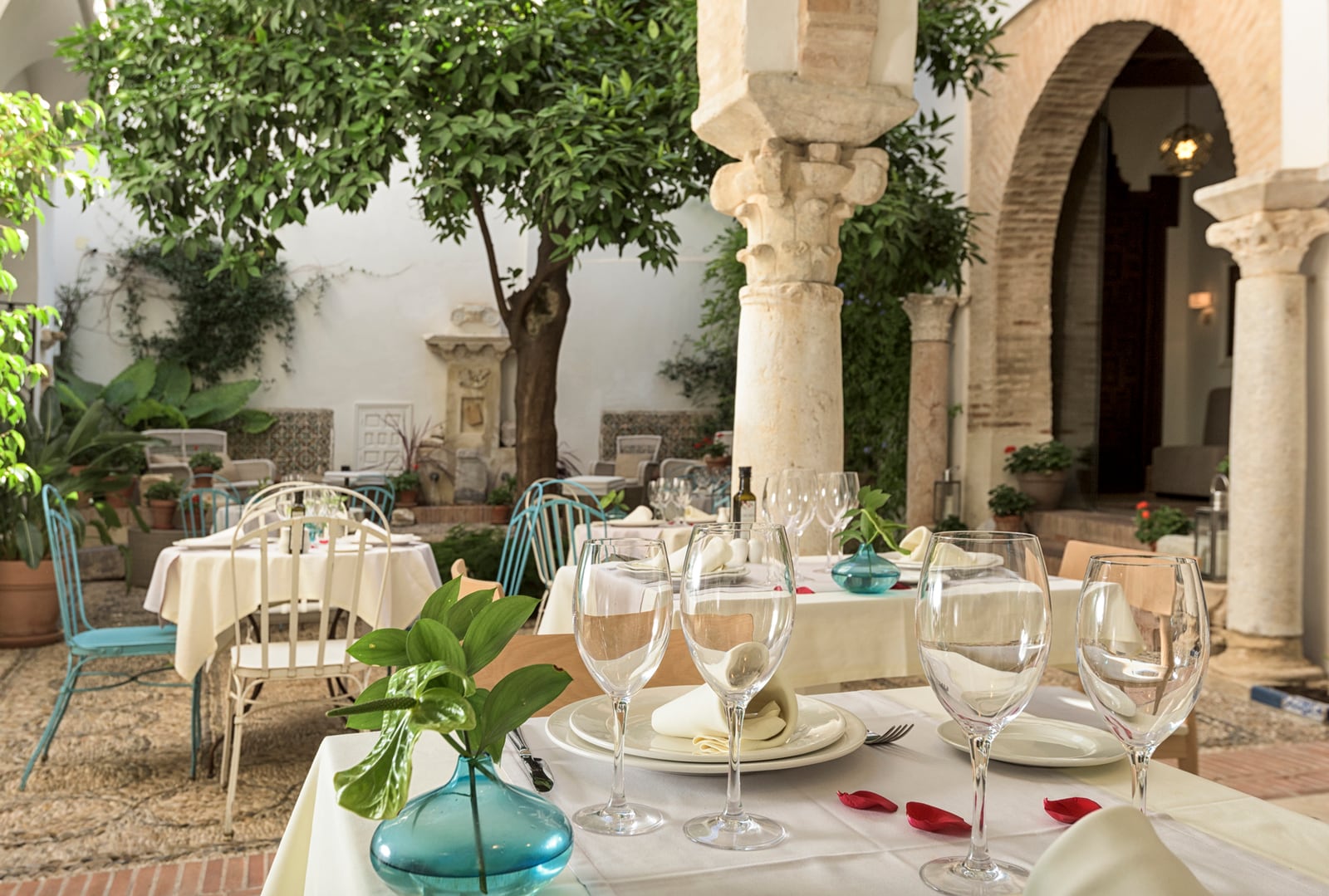
Balcón de Córdoba is the purest version of that argument — ten rooms twenty metres from the monument, in a house holding a hundred pieces of Roman and Hispano-Muslim stonework.
If you have three or more
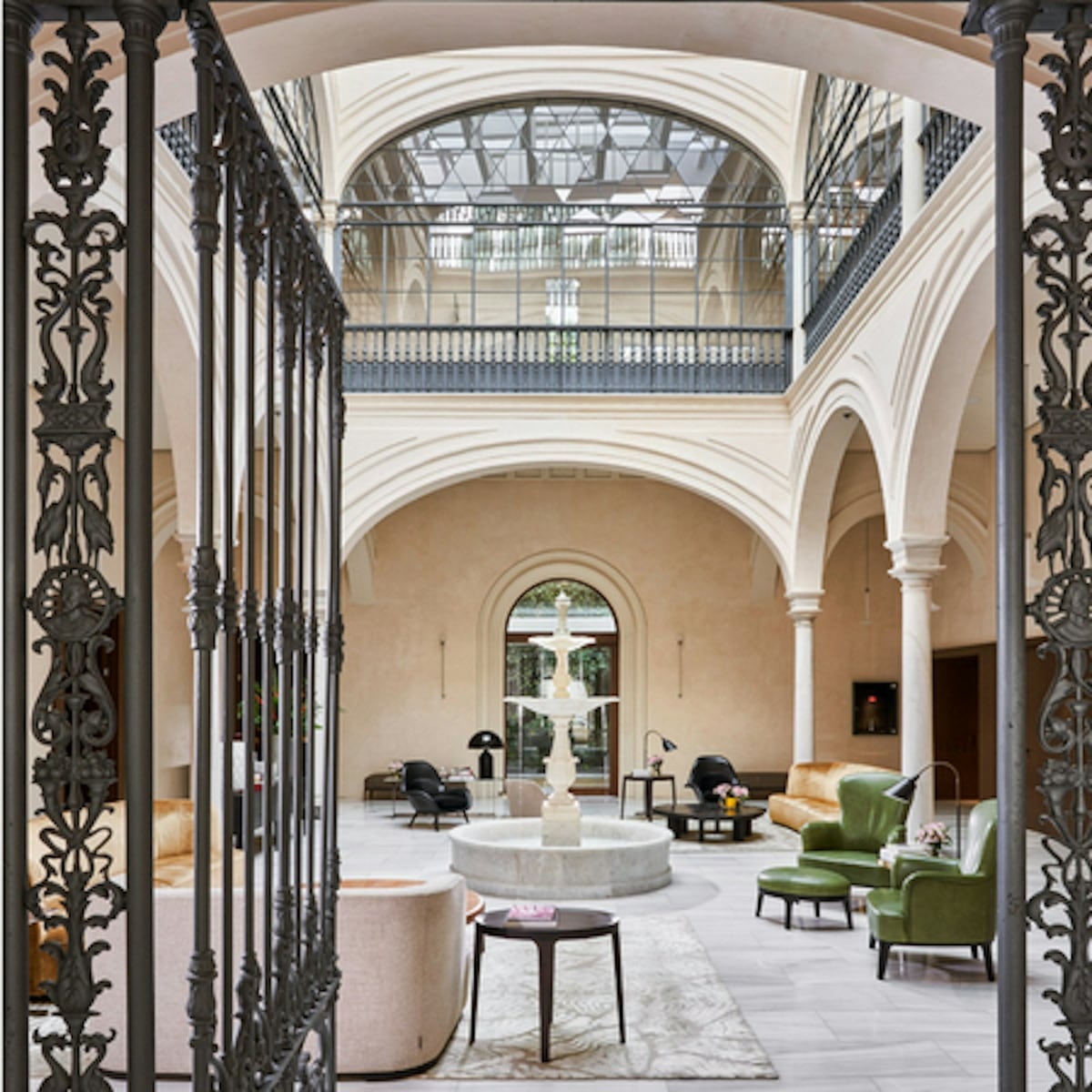
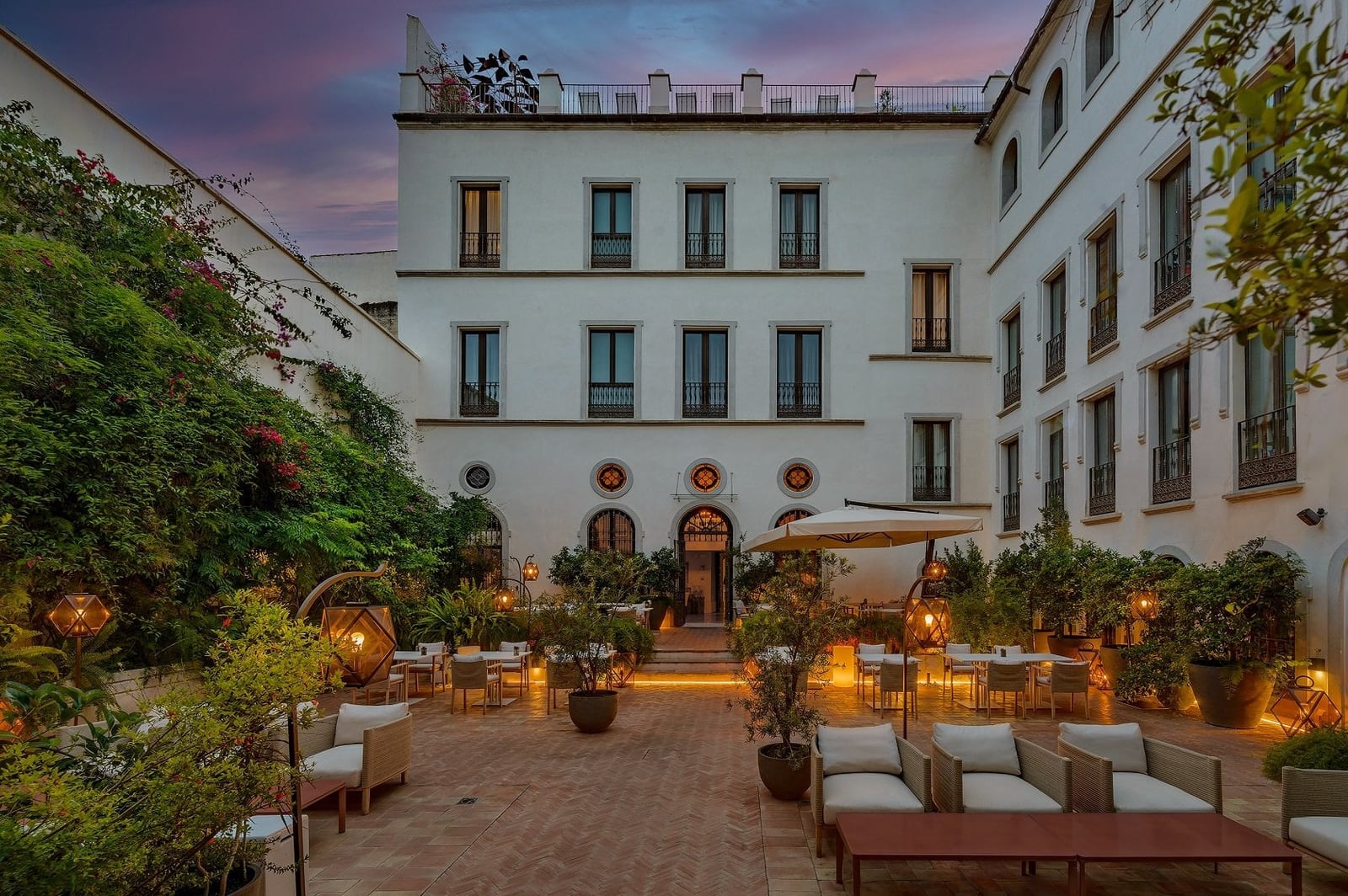
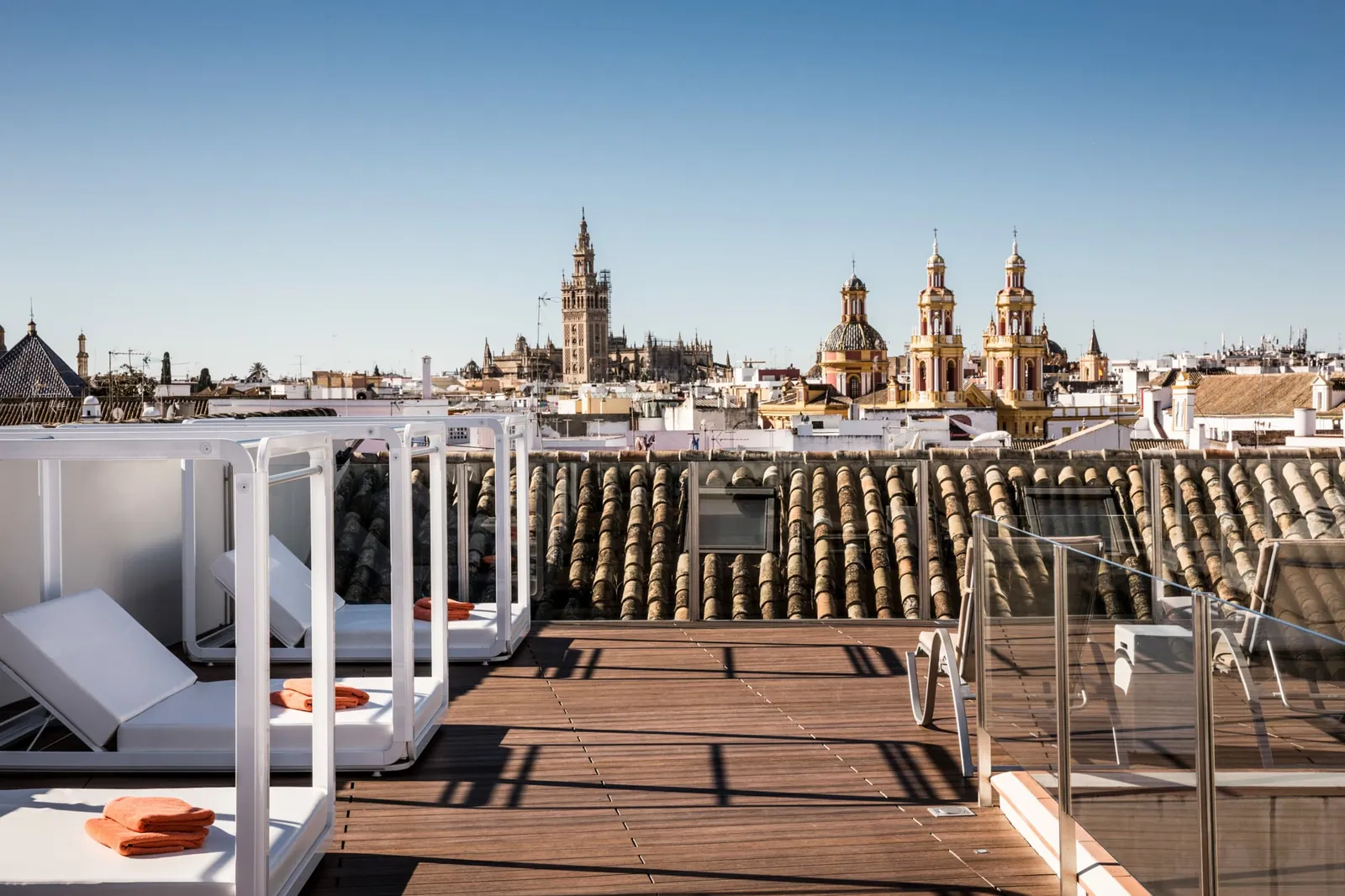
Seville. Three nights is its honest minimum, and the hotels reward it: the format is the casa palacio, and Mercer Sevilla and Palacio de Villapanés are two scales of the same idea — eleven rooms under a glass dome, and a 1729 palace with a roof over the Giralda.
Seville also has evenings in a way Córdoba does not. Triana, the river, the tapas circuit around the Alfalfa: it fills the hours between the monuments, which in Córdoba you spend more slowly and more quietly.
With four nights, do both
Three in Seville, one in Córdoba, in that order — arriving into Córdoba in the late afternoon means walking into the Judería as it empties, which is the best introduction the city has.
The train is the whole reason this works. Forty-five minutes, station to station, both centres walkable from the platform. A hire car for this pair is a liability: two pedestrianised old towns and two parking problems.
The one that decides it: heat
Both cities are among the hottest in Europe and Córdoba is the hotter of the two, regularly above 40 °C in July and August. That is not a detail — it changes which hotel you want.
In summer, the argument for Hospes Palacio del Bailío, with gardens and a pool, gets much stronger than the argument for a ten-room house at the door of the Mezquita. In March or October, the reverse.
Frequently asked questions
Is Córdoba worth staying overnight or just a day trip?
Overnight, if you can. The old town fills with day visitors and empties in the evening; the Judería after dark is the best of the city and a day trip misses it entirely.
How far is Córdoba from Seville?
About forty-five minutes by AVE, station centre to station centre, with both old towns walkable from the platform. Driving takes roughly ninety minutes and creates a parking problem at each end.
Which is better for a first trip to Andalusia?
Seville, if you only pick one — it is a full city with three or four days in it. Córdoba is the stronger single monument, but it is a two-night stop rather than a base.
When should you avoid both cities?
July and August. Both regularly pass 40 °C and Córdoba is the hotter. March to May and October to November are the months, with April in Seville and early May in Córdoba being spectacular but very full.