Where to stay in Oaxaca: the city, the valley or the coast
Mexico's great food city, the mezcal villages of its valley and a surf town on the Pacific where architects have built some of their most talked-about hotels. Six small stays, and how to move between the mountains and the sea.
By The Unlisted Editorial Team · 30 September 2026 · 9 min read
In Oaxaca City, choose Otro Oaxaca for new architecture facing Santo Domingo, Casa Antonieta for a house that goes back to 1529, or Escondido Oaxaca for Alberto Kalach's tower and a weekly tasting menu. In the valley, Casa Silencio puts six suites inside a working mezcal distillery. On the coast at Puerto Escondido, Casa TO is Ludwig Godefroy's concrete temple near the surf, and Hotel Terrestre is Kalach's solar-powered brick villas at Punta Pájaros. Give the city four nights and the coast three or four; fly between them in under an hour, or drive the new highway in about three.
Oaxaca is two places that happen to share a name and a state. Oaxaca City sits at about 1,550 metres in a high valley of southern Mexico, its historic centre built in green cantera — the local volcanic stone — and listed by UNESCO with the Zapotec city of Monte Albán on the hill above. Puerto Escondido lies on the Pacific beyond the Sierra Sur, a fishing town that became a surf capital and, in the last few years, a place for architecture.
Neither has grand hotels, and that is their strength. Our six stays range from six suites to sixteen rooms. Five of them are in the MICHELIN Guide, all without a Key in the 2026 selection, and the sixth, in a mezcal distillery, is not in the Guide at all. What they share is a building worth the journey on its own.
Oaxaca City: three houses in the centre
Stay in the historic centre, where the markets, the zócalo and the city's best restaurants are all on foot. The three hotels we kept are within a few streets of one another and differ mainly in temperament.
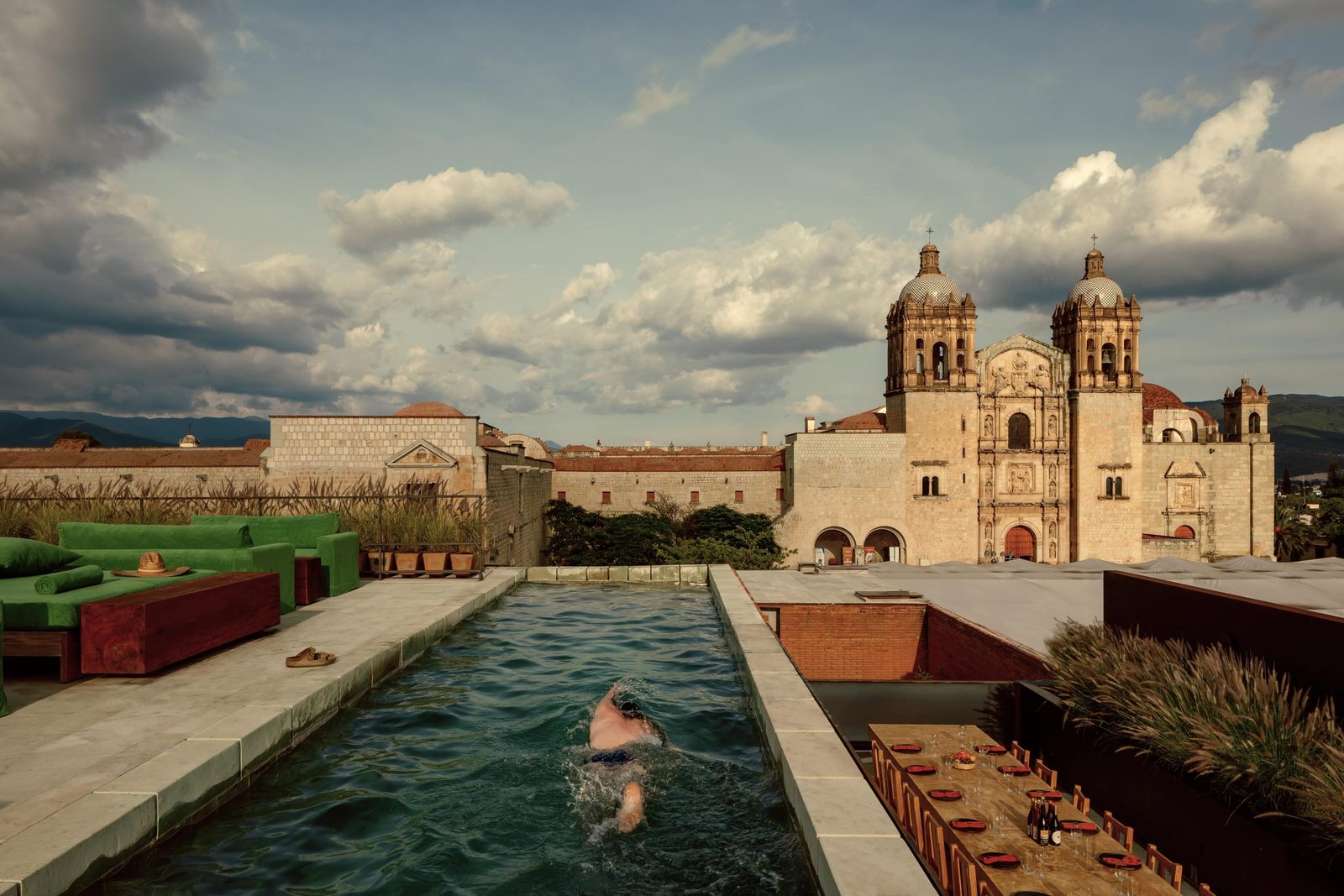
Otro Oaxaca is the most striking new building in the centre: sixteen rooms on Calle Macedonio Alcalá, directly across from the church of Santo Domingo, opened by Grupo Habita in August 2023. The architect João Boto Caeiro of RootStudio drew its plan from the Zapotec site of Mitla and built it in brick, board-marked concrete, timber and stone, with a pool on the roof facing the church's twin towers and, underground, a round spa pool lit by a single shaft of daylight. Alcalá is the city's pedestrian spine, and the rooftop is lively in the evening; light sleepers should know that.
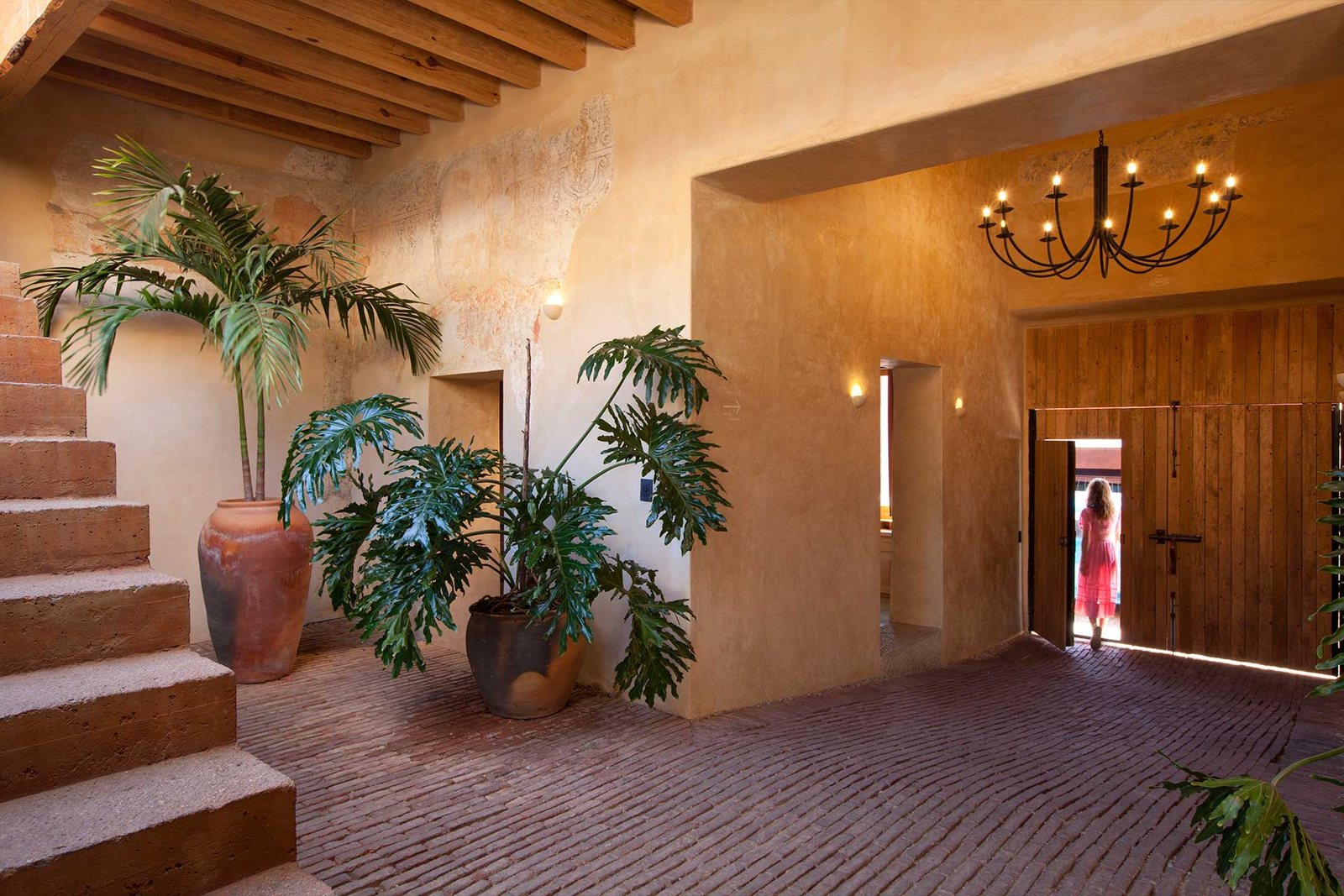
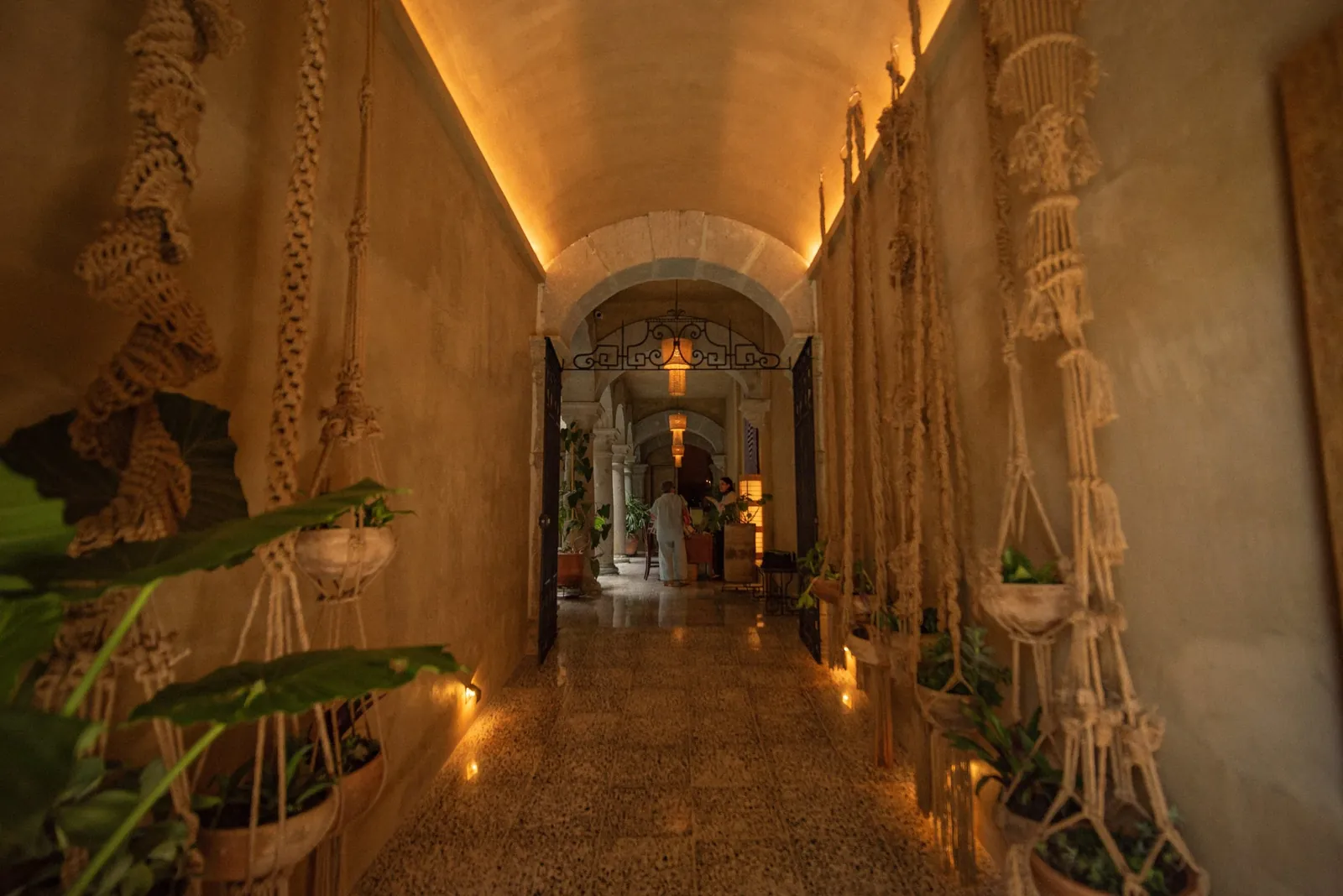
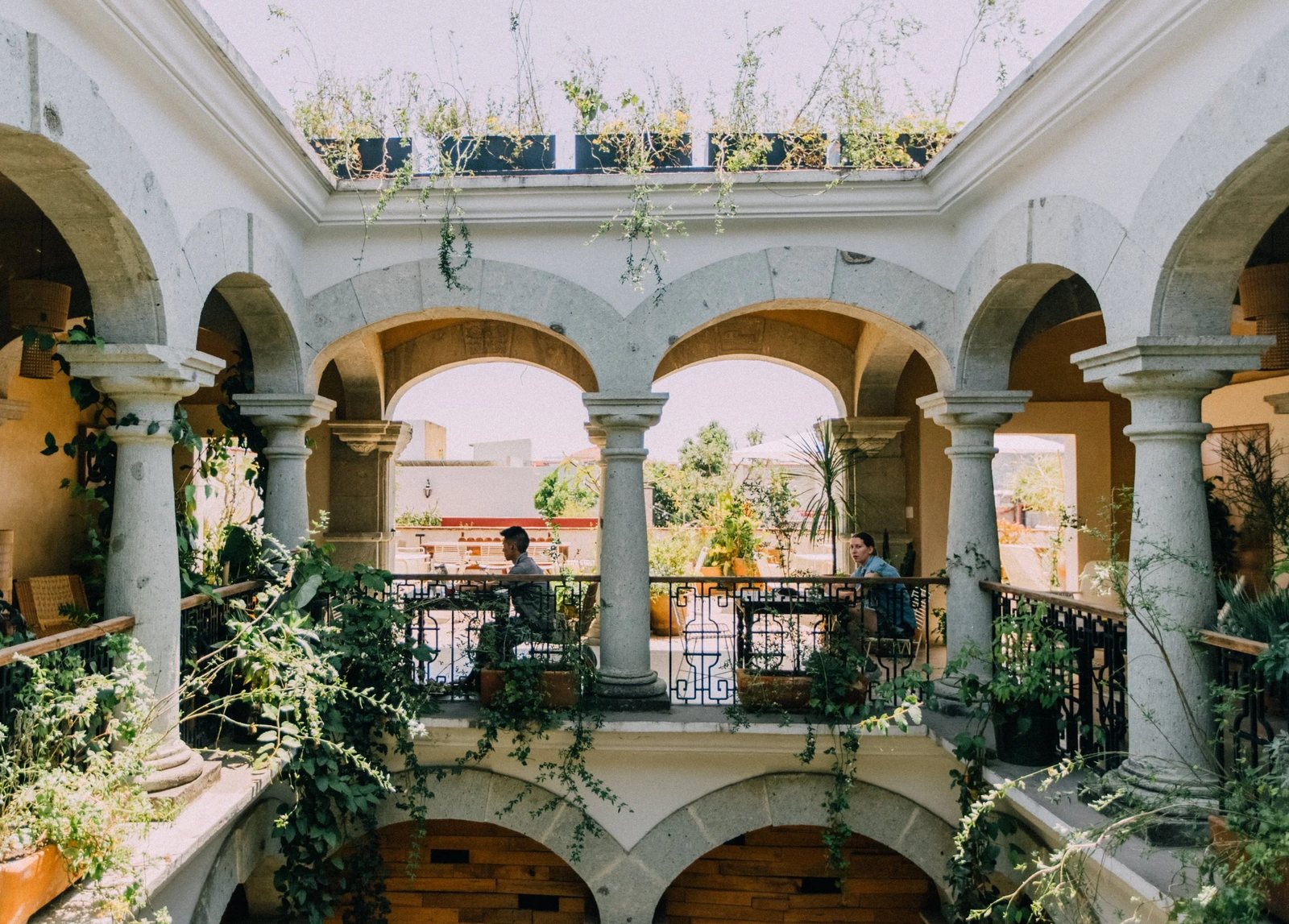
Casa Antonieta, on Avenida Hidalgo, is the opposite: nine rooms in one of the oldest buildings in the city, a house that goes back to 1529 and belonged to the convent of San Pablo. Stone columns carry the building, arches frame a courtyard full of plants, and there is a rooftop terrace for the last hour of light. There is no pool and no spa, and service is personal rather than round-the-clock. It is the one to choose if you plan to eat out every night, which in Oaxaca you should.
Escondido Oaxaca, opened in December 2019, joins a restored 19th-century casona to a timber-clad tower by the architect Alberto Kalach. Twelve rooms, most of them between 20 and 23 square metres, a small pool and bar on the roof, and a restaurant where chef Saúl Carranza changes a tasting menu every week. It is the quieter sister of Otro Oaxaca, a few blocks away, and the better choice if you want a good table downstairs without the bustle of Alcalá.
The valley: mezcal where you sleep
Mezcal is the spirit distilled from roasted agave hearts, and the Central Valleys east of the city are its heartland. On the road to Mitla, about an hour out, Santiago Matatlán calls itself the world capital of mezcal, with palenques — traditional distilleries — open to visitors, and Teotitlán del Valle, on the same road, is known for its wool rugs. Go with a driver: tastings are generous.
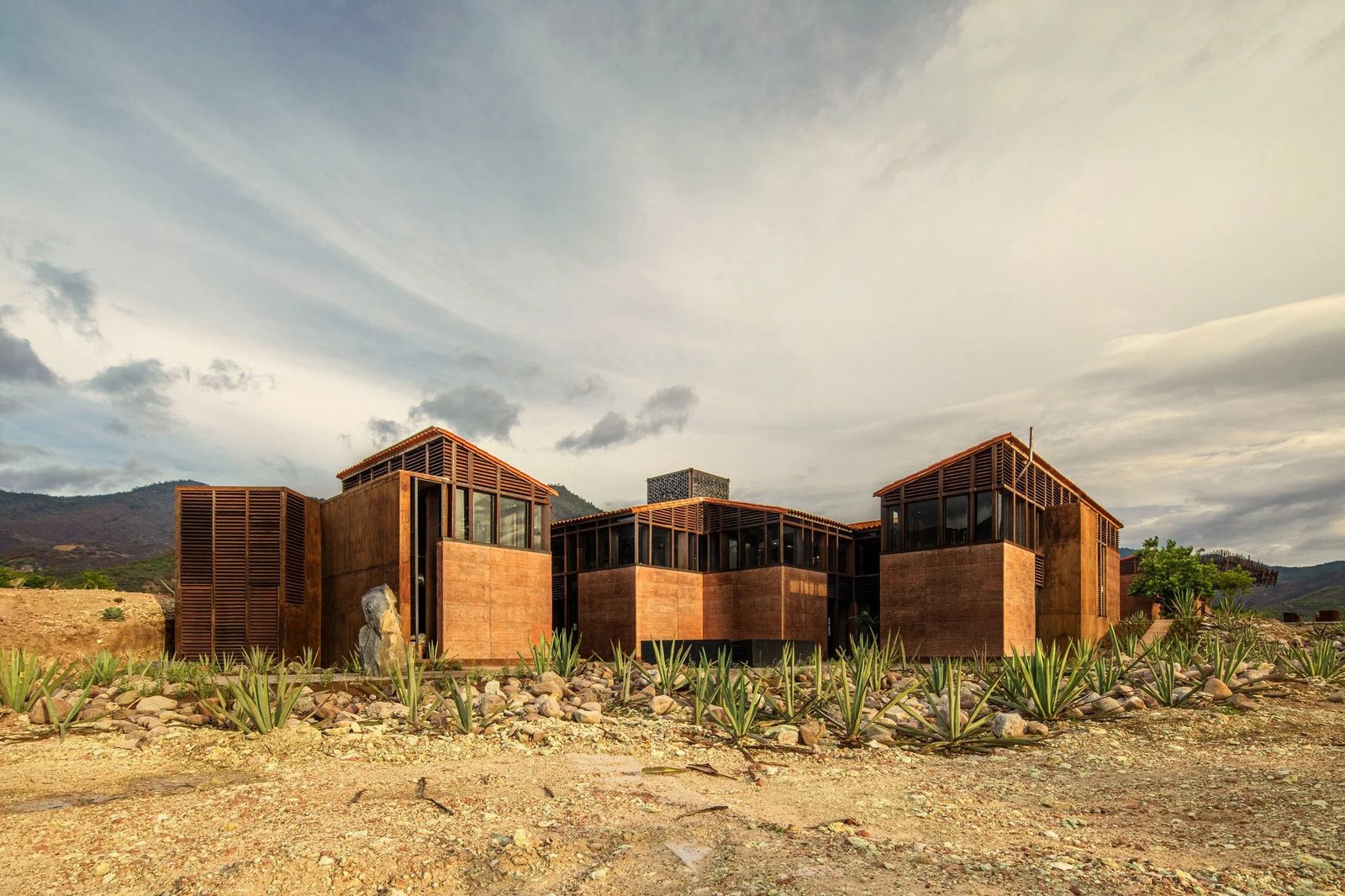
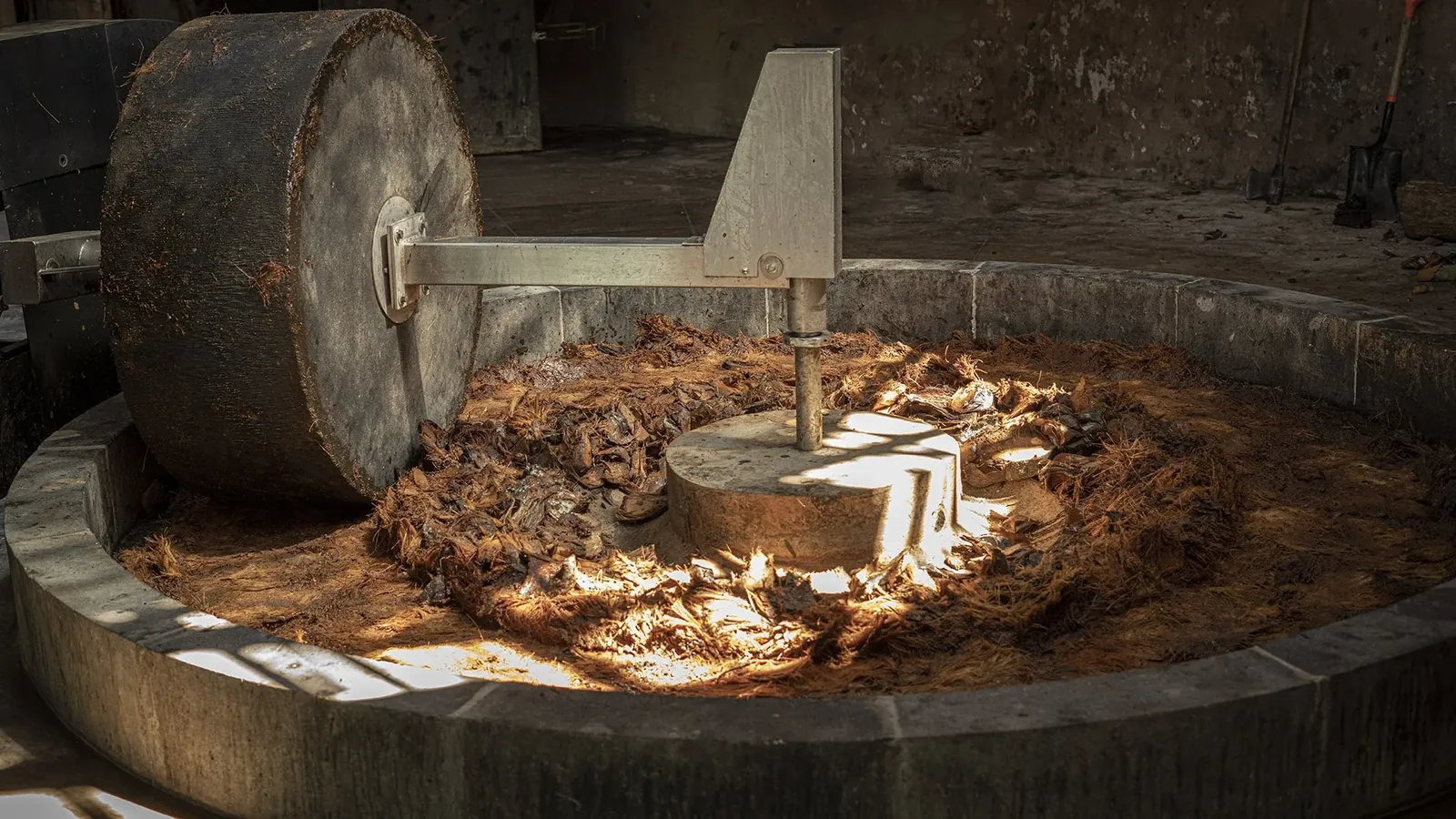
Casa Silencio is the way to see mezcal made rather than only taste it. Six suites stand inside the working distillery of Mezcal El Silencio, on nine acres of agave in the valley of Xaaga, near Mitla. It opened on 15 September 2021, designed by the architect Alejandro D'Acosta in rammed earth, timber and volcanic stone: the central wing is the palenque, where the agave is roasted, crushed under the tahona — the stone mill wheel — fermented and distilled, and the suites stand on either side. The rate includes breakfast, lunch and dinner, the distillery tour and a tasting. It is about an hour and a half by road from the city, it is not in the MICHELIN Guide, and it is booked through the hotel rather than on Booking.com. Two nights are enough.
Puerto Escondido: two architects on the Pacific
Puerto Escondido became famous for the wave at Zicatela, a powerful beach break that surfers call the Mexican Pipeline. It is for experienced surfers, not for swimming. The calmer coves — Carrizalillo, Puerto Angelito, Manzanillo — are where to swim, and La Punta, at the southern end of Zicatela, is where to learn and where to spend the evenings.
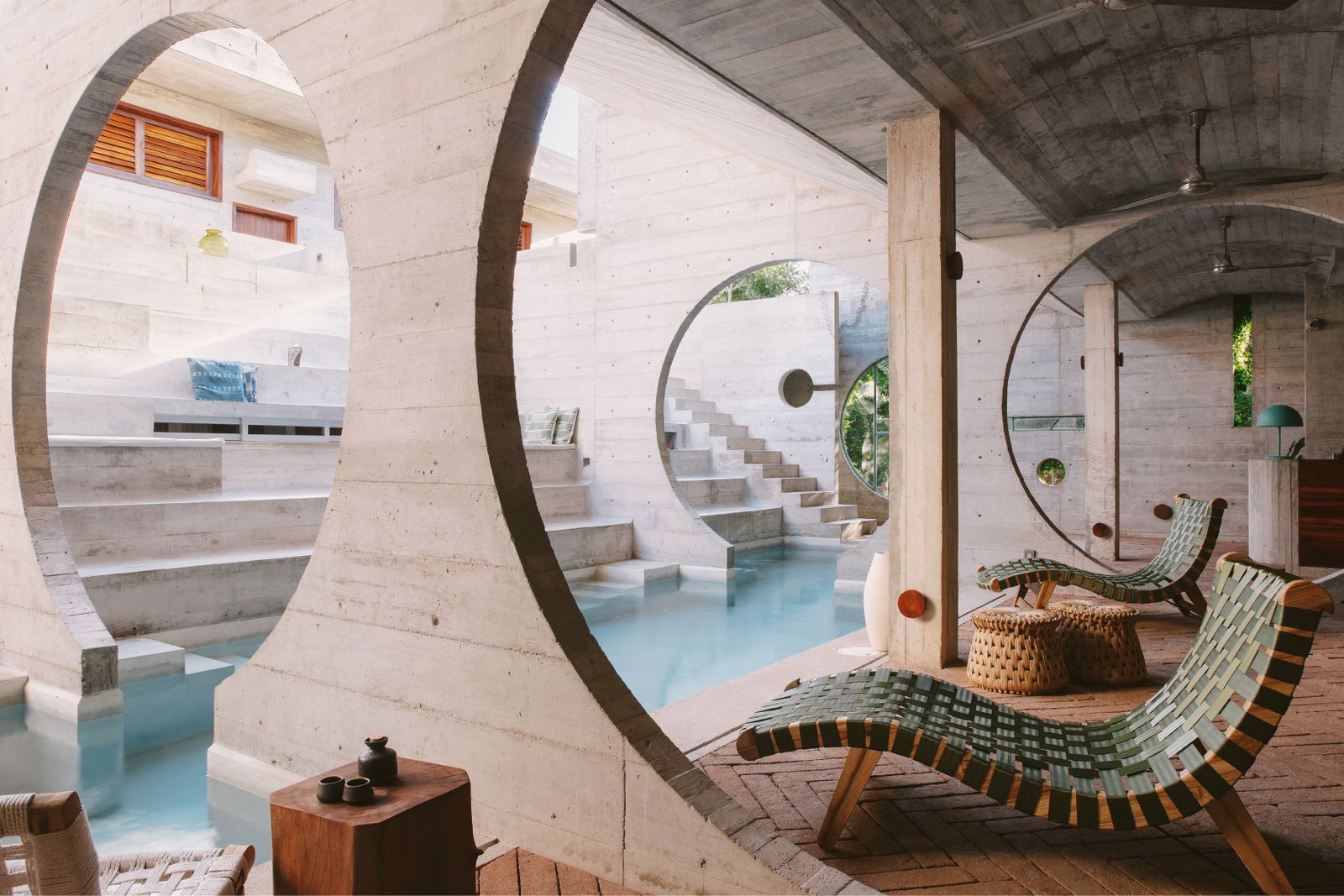
Casa TO is at La Punta: nine suites in raw, board-marked concrete, completed in 2022 by the architect Ludwig Godefroy as his reading of an Oaxacan temple. Pools run through round openings cut in the walls, guests lounge on stepped concrete blocks, and on the roof Glou Glou pours natural wine with the coast's seafood. It is adults only, five blocks from the beach and about 15 minutes from the airport. It is a small, stark house run lightly, in a lively surf neighbourhood; do not come for polish.
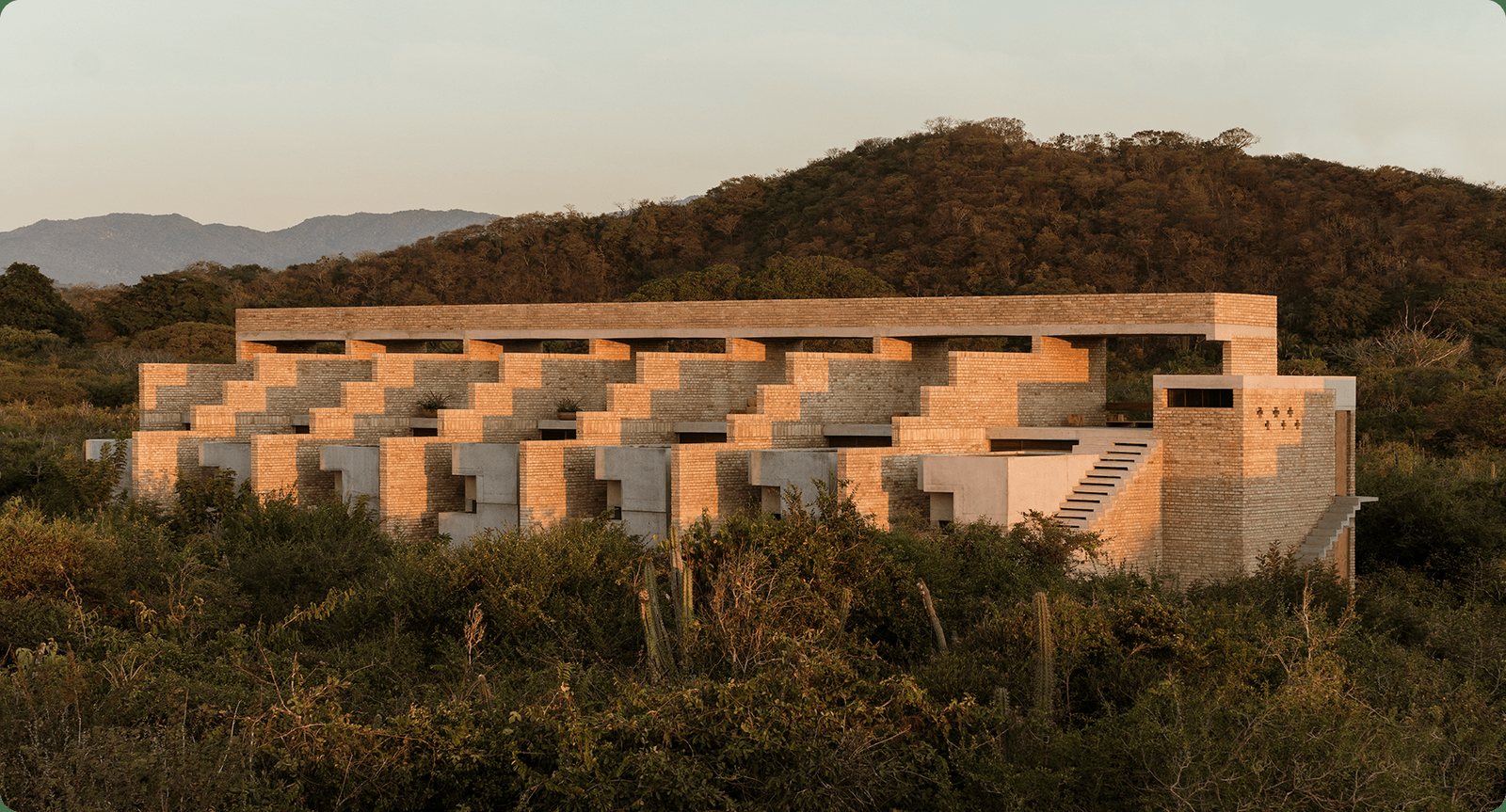
Hotel Terrestre, half an hour west at Punta Pájaros, is Alberto Kalach again, built for Grupo Habita and opened in 2022: fourteen brick villas in a line between the mountains and the sea, each with a terrace and its own plunge pool, the whole hotel running on solar power off the grid. There are books in place of televisions, and the villas are open to the breeze rather than air-conditioned. It lost its MICHELIN Key in the 2026 selection and is still listed by the Guide; for us it remains one of the most remarkable buildings on the Mexican coast, with the caveat that it is a drive from town and the sea in front of it is often rough.
The architecture thread
Oaxaca has become one of the places where Mexican architecture is most visible, and a trip here can follow it. Alberto Kalach built both the tower at Escondido Oaxaca and the villas at Hotel Terrestre, in timber in the city and brick by the sea. Ludwig Godefroy's concrete at Casa TO and João Boto Caeiro's brick at Otro Oaxaca both look back to Zapotec temples, and Alejandro D'Acosta's rammed earth at Casa Silencio comes out of the valley's own soil.
Two practical consequences: most of these buildings put design before comfort — raw concrete, open-air rooms, no televisions — and most are small, so book early for the dry season and the festivals.
Getting between the city and the coast
By air, small regional airlines fly between Oaxaca City and Puerto Escondido in under an hour, and both airports have direct flights from Mexico City, about an hour away. That makes an open-jaw trip easy: fly into the city and out of the coast, or the reverse.
By road, the Barranca Larga–Ventanilla highway, opened in February 2024, has cut the drive through the Sierra Sur to about three hours from six or more. It is still a mountain road, best driven by day, and with a driver it turns the transfer into a way of seeing the Sierra Sur.
- Eight nights: three at Otro Oaxaca or Casa Antonieta, two at Casa Silencio, three at Casa TO.
- Six nights, city and sea only: three at Escondido Oaxaca, three at Hotel Terrestre, with a day in the valley from the city.
When to go
The dry season, from November to April, brings clear days and cool nights in the city and warm, calmer seas on the coast. The rains fall mostly from June to September, usually as afternoon storms in the valley, and on the coast the rainy and hurricane season runs from June to October. Surfers come for the biggest swells between May and September; swimmers should not.
Two moments are worth planning a year around: Día de Muertos, from 31 October to 2 November, and the Guelaguetza dance festival, on two Mondays in late July. Both fill the city's few rooms months ahead. For how Oaxaca compares with Yucatán and the capital on a first trip, see Yucatán, Oaxaca or Mexico City.
Frequently asked questions
Where should I stay in Oaxaca City?
In the historic centre, on foot to the markets and restaurants. Otro Oaxaca for architecture and a rooftop pool facing Santo Domingo, Casa Antonieta for a calm house around a 16th-century courtyard, Escondido Oaxaca for a quieter design hotel with a good restaurant.
How many nights do you need in Oaxaca?
Three or four in the city for the centre, the markets, Monte Albán and a day in the valley. Add two nights among the agave at Casa Silencio or three or four on the coast if you have a week or more.
How do you get from Oaxaca City to Puerto Escondido?
Small regional airlines fly between them in under an hour. By road, the Barranca Larga–Ventanilla highway, opened in February 2024, takes about three hours; drive it by day.
Do any Oaxaca hotels hold a MICHELIN Key?
Not these. Otro Oaxaca, Casa Antonieta, Escondido Oaxaca, Casa TO and Hotel Terrestre are selected by the Guide without a Key in 2026; Terrestre lost the Key it held before. Casa Silencio is not in the Guide. Oaxaca as a whole has five Key hotels in 2026, down from seven; the full list for Mexico is in our MICHELIN Key guide to Mexico.
Can you swim at Puerto Escondido?
Not at Zicatela, which is for experienced surfers. Swim at the sheltered coves of Carrizalillo, Puerto Angelito or Manzanillo, and ask at the hotel before swimming anywhere along the open coast.
Stays in this story
Otro Oaxaca
Oaxaca City, Mexico
from €350 / night
Casa Antonieta
Oaxaca City, Mexico
from €170 / night